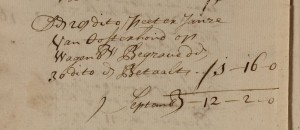
A begraafboek is a burial book. Begraafboeken are the primary source of information about deaths before 1811. They can be found at the archives in the capitals of the provinces. Many burial books have been digitized and are available on Familysearch.org. … [Read more...]
Column: Farewell
1 November 2013 by 4 Comments
After twenty years, it is time to say goodbye. I have struggled in vain but it will not do. I have decided to say farewell to my old genealogy program. Twenty years: it feels like forever in this digital age where three-year-old software feels outdated. My old program was MS-DOS-based and did not even work with a mouse. To keep it running on new versions of Windows required me to jump through an increasing amount of hoops. Emulators, virtual machines, miscellaneous tools and gadgets: whatever … [Read more...]
Quick tip: Always check all versions of a marriage record
30 October 2013 by Leave a Comment
In the days before the introduction of the civil registration in 1811 (or slightly earlier in Limburg and Zeeuws-Vlaanderen), the only legally recognized marriages were those performed before the court or by the Dutch Reformed church. Roman-Catholic couples usually married in the Roman-Catholic church as well. Be sure to always check both types of records because one may include more information than the other, as the following example will illustrate. Roman-Catholic marriage record This … [Read more...]
Dutch term: Dopen
28 October 2013 by 4 Comments
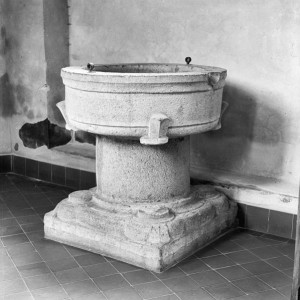
The Dutch word dopen means baptisms or to baptize. Doopboeken (baptize books) are the main source for birth information prior to the introduction of the civil registration (in 1811 for most of the Netherlands but as early as 1796/1797 for Limburg and Zeeuws-Vlaanderen). … [Read more...]
Source: prayer cards
25 October 2013 by 1 Comment
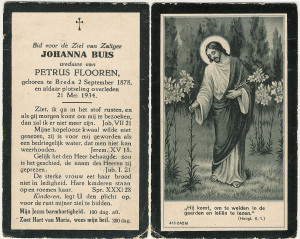
I vividly remember the first time I visited the Central Bureau for Genealogy in The Hague. I must have been about sixteen years old, and had just started doing genealogy. My mom also became interested and went with me. When we checked the catalog, we found that there was an envelope with prayer cards of people named Flooren, my grandmother's maiden name. Within minutes, we held the prayer card of Petrus Flooren, my three-times-great-grandfather. My mom and I were very excited about this find. … [Read more...]
Quick tip: know the witnesses
23 October 2013 by 2 Comments
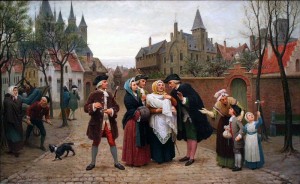
Understanding who the witnesses in records were can help you find your ancestors. Baptism witnesses were usually chosen from the immediate family, often from siblings of the parents. Witnesses or informants for death records, on the other hand, were often neighbors. Knowing these customs can help you understand who these people were and how they fit into the picture you're creating about your ancestor. … [Read more...]
Dutch term: testament
21 October 2013 by Leave a Comment
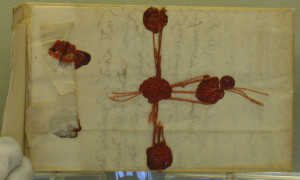
A testament is a last will. Most people did not have a last will and died intestate. Usually, only wealthier people had a will drawn up. Wills can be found in notarial records or in court records (before 1811 in areas that did not have notaries). … [Read more...]
Ask Yvette: English version of WieWasWie?
18 October 2013 by 1 Comment

Many people have asked me if there is an English version of WieWasWie, the website with the largest index of genealogical records in the Netherlands. WieWasWie is a joint project in which many different archives participate. Volunteers enter the information. In some cases, scans are also available. The website is the successor of the very popular Genlias website, that is no longer available. Unlike Genlias, WieWasWie does not have an English version. I recently attended a presentation about … [Read more...]
Quick tip: royal dispensations
16 October 2013 by Leave a Comment
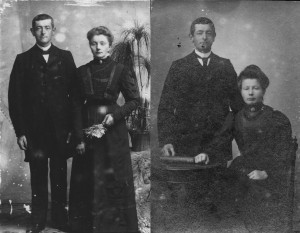
Until 1939, it was forbidden to marry your sister-in-law or brother-in-law. Royal dispensation was required for such a marriage. Many widowed men who wanted to marry their deceased wife's sister applied for a dispensation. They were routinely granted, as in the case of my great-grandparents. Extracts of the royal dispensations can be found in the marriage supplements. … [Read more...]
Dutch term: Trouwboekje
14 October 2013 by 1 Comment
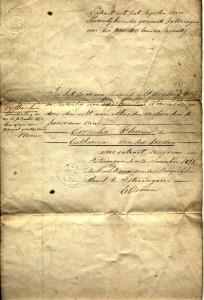
A trouwboekje is a booklet that the bride and groom were issued at the time of their marriage. It lists their names, date and place of marriage and has room to add all of their children. It was referred to often when people needed to prove their identity. Read more about marriage booklets and the implications for your research. … [Read more...]