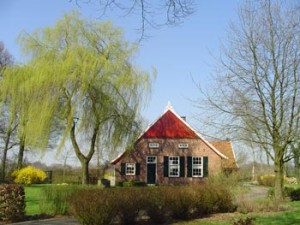
A boerderij is a farm. Sometimes, you will find boerderij doende (doing farm) as an occupation, which means that the person was a farmer. Most farmers were tenants who did not own their farms. Some farms are very old; not necessarily the buildings, but the agricultural business at that location. The buildings got renewed, the property got sold, tenants moved in an out, but a farm may have existed on that location for hundreds of years, perhaps even more than a thousand. Tracing the … [Read more...]
Find your ancestors by understanding how records are created
23 November 2013 by 1 Comment
Searching for records using Google or Ancestry will only get you so far. You will just find records that have already been indexed and put online. If searching does not give you the records you need to answer your research question, try to think like an archivist to understand what other records may exist. … [Read more...]
Was your ancestor born in Reusel-De Mierden, Noord-Brabant? Guess again!
22 November 2013 by 66 Comments
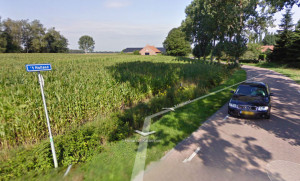
When I look at online trees, especially on Ancestry.com, I often see "Reusel, Reusel-de Mierden, Noord-Brabant, Netherlands" listed as the place of birth. At first I was puzzled how all these people with names that are typical for Friesland, Groningen or Gelderland would have children in a village on the other side of the country. There was obviously something wrong there. But then I started using FamilyTreeMaker and tried to resolve some place names. Guess what? "Holland" resolves to "Reusel, … [Read more...]
Quick tip: don’t expect any early photographs
20 November 2013 by Leave a Comment
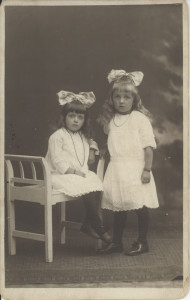
Photography took off later in the Netherlands than in the UK or the US. Most people don't have any pictures of their family that were taken before 1910/1920. If you do come across an early photograph, be very careful when dating it. A photo that looks like it would have been taken in the 1880s in the US, may well be from the 1900s in the Netherlands, since the technology was so far behind. … [Read more...]
Dutch term: Uitgebreid zoeken
18 November 2013 by Leave a Comment
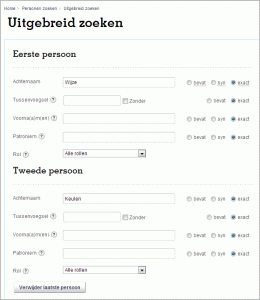
The words uitgebreid zoeken mean "advanced search" (literally: elaborate search). You will often find the term on websites with genealogical databases where the "uitgebreid zoeken" link will take you to a search form with more options to formulate your query. Beware that most search engines only find exact matches, so don't fill out too much information. … [Read more...]
Name taking records
15 November 2013 by 5 Comments
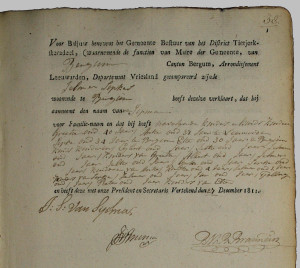
The French occupation from 1795-1813 introduced many new types of administration, including the civil registration. To properly record people, it was necessary that they all had a last name. In 1811 and 1813, Napoleon decreed that everybody had to register their last name. After the French occupation ended, the Dutch government decided to keep the obligated last name. In 1825 they required that everybody who had not registered his name yet should do so. You can find information about … [Read more...]
Quick tip: Find church records at the archives, not at the churches
13 November 2013 by 3 Comments
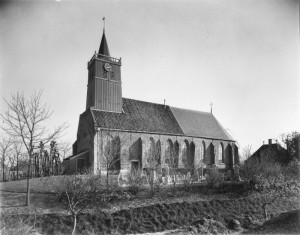
When the civil registration was introduced in 1811 or slightly earlier, the government required that all churches turn in their baptismal, marriage and burial records. These church records would become the foundation of the civil registration, where government officials could determine when a person was born, married and died. … [Read more...]
Dutch term: weduwnaar
11 November 2013 by Leave a Comment
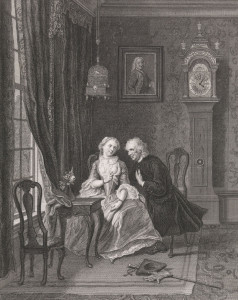
The word weduwnaar means widower. In most marriage records, even the early ones, the fact that groom is a widower will be mentioned. If you're lucky, the name of the previous spouse is mentioned too, but that has only been required since the civil registration (1811 or slightly earlier). … [Read more...]
How soon after birth were children baptized?
8 November 2013 by 5 Comments
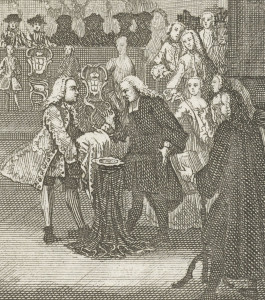
In response to the article about the word dopen (baptisms), Tore Langholm asked: Has “baptism” always/usually been equivalent to “infant baptism” in the Netherlands? I just found a record of a baptism in the Nederlandse Hervormde Kerk in July of 1698, and wonder if I can assume that this is also the childs’ birth year? … [Read more...]
Quick tip: surnames database
6 November 2013 by 13 Comments
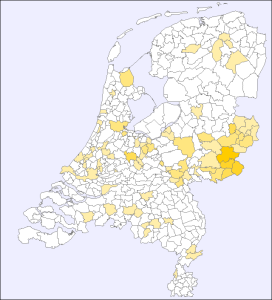
The Meertens Instituut (Institute) has a database of surnames in the Netherlands where you can search for a name to get a map that shows where people by that name lived in 1947 and 2007. This can be a great way to find out where in the Netherlands your ancestors may have come from, as many names are specific to a certain area. The example shows that the Hoitink name was most common in the eastern part of the Netherlands. This matches my genealogical research, that proved that the family … [Read more...]