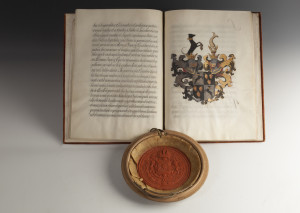
A familiearchief is an archive created by a family. The records in a family archive can relate to personal, business, or government affairs and were often formed by several generations. Many familiearchieven are still in the possession of the family, while others have been turned over to an archival institution. The website Archieven.nl has finding aids for many familiearchieven that are in public facilities. … [Read more...]
Dutch Genealogy News for October 2017
3 November 2017 by Leave a Comment
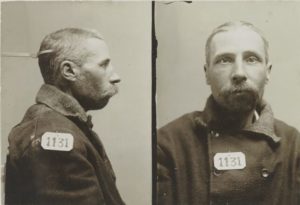
Here is an overview of the new sources, websites, and projects that were announced last month. Online records The Brabants Historisch Informatie Centrum (the Noord-Brabant provincial archives) made 100 meter [about 350 feet] of notarial records available online, mostly from the 1800s. 250,000 records have been indexed, so you can search by name. View the Notarial records. Brabant prison records of more than 300,000 criminals have been added to the Brabant Historisch Informatie Centrum … [Read more...]
Dutch term – Grietenij
30 October 2017 by 1 Comment
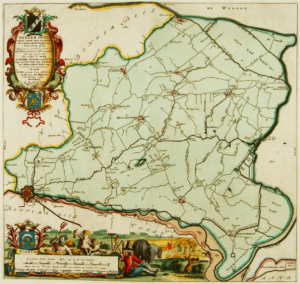
A grietenij is a municipality. The term is mainly used in Friesland. In 1851, it was changed to gemeente, the common Dutch word for municipality. In parts of Groningen, the term grietenij was also used to refer to the local courts. A grietenij was led by the grietman, whose function was similar to that of a mayor. … [Read more...]
Quick tip – No Burial Information in Death Records
26 October 2017 by 1 Comment
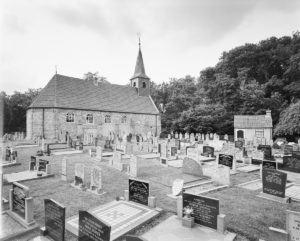
Unlike in some other countries, Dutch death records do not name the place of burial. This can make it hard to find out where your ancestor was buried. There are online websites that list graves, but since graves are routinely cleared after a few decades, the grave may not survive. Sometimes, you can find an announcement of the burial in the paper. You can also use burial registers of the church they attended to see if your ancestor was buried there. … [Read more...]
Dutch term – Verboden graad
23 October 2017 by Leave a Comment
A verboden graad means "forbidden degree." You will usually encounter this in marriage records, if the bride and groom received dispensation for being too closely related. This could mean that they were blood relatives, or relatives-by-marriage. You can also encounter the term in requests for dispensation to the civil or ecclesiastical courts, or the King and Queen (in later times). Read more about royal dispensations. … [Read more...]
Quick tip – Guest blog post on FamilySearch
18 October 2017 by 1 Comment
Yvette Hoitink wrote a guest blog post on FamilySearch about How to Use Dutch Records on FamilySearch. Read about the amazing records that can be found online. Millions more Dutch records will be added in the coming weeks. … [Read more...]
Dutch term – Besnijdenis
16 October 2017 by Leave a Comment
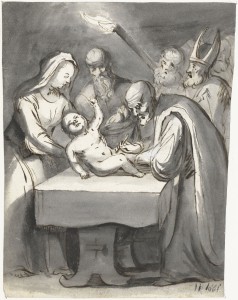
Besnijdenis is the Dutch word for circumcision. In the Netherlands, circumcision was traditionally performed on Jewish boys only. For the period before the introduction of the civil registration in 1811, besnijdenisregisters [circumcision records] are an important source of birth information about male Jewish ancestors. They can often be found among the church records. Read about other resources for Jewish research. … [Read more...]
Dutch Genealogy News for September 2017
13 October 2017 by Leave a Comment

Here is an overview of the new sources, websites, and projects that were announced last month. Online Dutch records 30,000 scans of records about the Dutch West India Company (WIC) and Dutch East India Company (VOC) from the archives of the States General have been added to the gahetNA website of the National Archives. View the scans in the finding aid of the States General. These records are especially valuable since many of the early WIC records were sold for scrap paper, so the records … [Read more...]
Dutch term – Openbaarheid
9 October 2017 by Leave a Comment
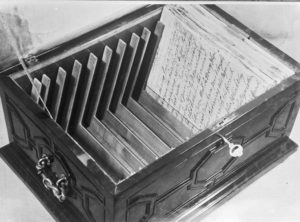
Openbaarheid means the status of a document as a public record. Records can have different statuses: Openbaar [public]: the record is public and can be accessed without restrictions. Beperkt openbaar [limited public]: the record is not public but can be accessed under certain conditions. Niet openbaar [not public]: the record is not public and cannot be accessed. Common reasons for records to not be public are to protect the privacy of living people or in the case of state secrets. … [Read more...]
Quick tip – Topotijdreis website
4 October 2017 by 1 Comment
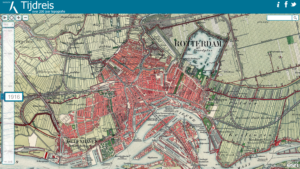
The website Topotijdreis [Topo Time Travel] allows you to view old topographical maps from 1815 to 2015 of the area where your ancestors lived. Not quite the same as an actual time machine, but it will have to do! You can zoom in on the map or search for places in the top right corner. Different zoom levels have different maps, so be sure to zoom in and out. The slider on the left allows you to select the year that you want to see a map for. You can also hit the play button in the top left … [Read more...]