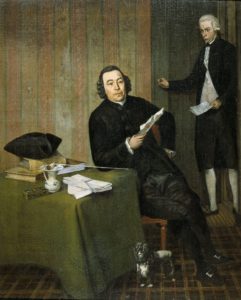
Notarial records are a great source of genealogical information. They can contain prenuptial agreements, business contracts, last wills, and estate divisions, giving you an insight into your anecstors' lives and family. Not all areas had notaries before 1811, in which case you can find these sources in local court records. A growing number of notarial and court records are available online, so if you haven't yet used these records, search again. Read more about Notarial Records. … [Read more...]
Dutch Genealogy News for November 2017
8 December 2017 by Leave a Comment

Here is an overview of the new sources, websites, and projects that were announced last month. Sources The National Archives of Curacao launched a new genealogy section on their website. Court records of Nijmegen from 1596 until 1811 are available at the Nijmegen Regional Archives website. 38,700 records of Amsterdam notaries were added to the online index of notarial records of Amsterdam. Notarial Archives of the following Frisian towns are now available at AlleFriezen for the … [Read more...]
Dutch term – Erfgenaam
4 December 2017 by Leave a Comment
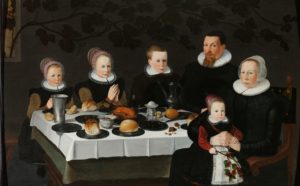
An erfgenaam is an heir. Most people in the Netherlands did not have wills, in which case you need to understand the local laws to know who the heirs would be. Most regions did not allow a person to disinherit the children completely, they would always receive their legitimate portion. Understanding the inheritance laws can help you figure out genealogical relations. Finding someone as an heir usually implies there is a family relationship. … [Read more...]
Yvette Hoitink and Other Dutch Presentations at NGS Conference in Michigan, May 2018
1 December 2017 by 11 Comments
I am so excited to have been invited to give three presentations at the National Genealogical Society conference in Grand Rapids, Michigan in May 2018. I will be talking about three topics: Dutch Genealogy 101: Finding Your Ancestors from the Netherlands (Wednesday 2 May 2018, 2:30 PM). Dutch vital records are available online and indexed. Learn how to use these records to find your ancestors from the Netherlands. For Family, Faith, and Fortune: Emigration from the Netherlands in the … [Read more...]
Dutch term – Innocent
27 November 2017 by 1 Comment
Innocent literally means "innocent." It is a term used in older Dutch records to refer to somebody who had a mental disability or who had severe dementia. You may encounter the term in a will, for instance, if the parent wanted to provide for a child with disabilities or in a hospital record describing an elderly patient's mental condition. Read researching relatives with disabilities for more information. … [Read more...]
Quick Tip – Dutch Immigrants may not have Understood Each Other
22 November 2017 by 9 Comments
Dutch immigrants sometimes settled in places where Dutch people from other parts of the Netherlands came too. This doesn't mean they could understand each other. Before the age of radio and television, there was no common Dutch language that everybody understood. Different regions had different dialects, different languages even. Frisian and Low Saxon are completely different from Flemish, to name three examples. To this day, people speaking in their local language or dialect won't be … [Read more...]
Dutch term – Vredegerecht
20 November 2017 by Leave a Comment
The Vredegerecht (sometimes spelled vredegeregt) is the Peace Court or Justice of the Peace. The system of vredegerechten was introduced during the French occupation and lasted from 1811 to 1838. The Vredegerecht held the lower jurisdiction in a canton, a district roughly the size of one or a few municipalities. After 1838, the vredegerechten were renamed to kantongerechten. In Belgium, these courts are still called vredegerechten. The vredegerechten only had the jurisdiction over … [Read more...]
Was Eleanor of Aquitaine my Ancestor? Discovering the Possible Line
17 November 2017 by 33 Comments
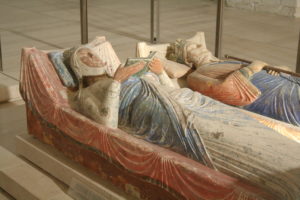
When I was about ten years old, I read about Eleanor of Aquitaine in the book De Gouden Dolk [The Golden Dagger] by Thea Beckman. Eleanor is a minor character in the book; the employer of a servant that the main character, a young crusader, fell in love with. Learning about Eleanor Queen Eleanor fascinated me. I found out that she was born about 1124 and died at age 80 in 1204. She was the Duchess of Aquitaine in her own right, and the only woman ever to be Queen of both France and England, by … [Read more...]
Dutch term – Passagierslijst
13 November 2017 by 1 Comment
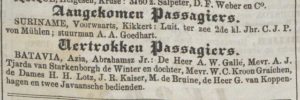
A passagierslijst is a passenger list. Most passenger lists are kept in the country of arrival. Passenger lists for people who emigrated from the Netherlands to another country, are rarely found in the Netherlands. But the passenger lists of people who travelled to the Netherlands may be found in Dutch archives. The Stadsarchief Rotterdam [Rotterdam City Archives] has the largest collection of passenger lists, including those of the Holland Amerika Lijn and the Koninklijke Lloyd. Passenger … [Read more...]
Quick tip – Don’t add another generation just based on the patronymic
9 November 2017 by 1 Comment
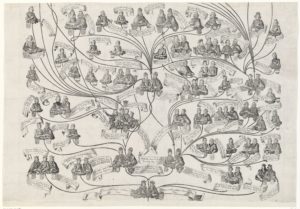
Your brick wall ancestor might be somebody who did not use a surname but went by patronymic only. He might be Leendert Pieters (son of Pieter), Jan Hendricks (son of Hendrick), or Claes Huijgens (son of Huijg or Hugo). The patronymic indicates the name of the father. It is a best practice in Dutch genealogy not to add another generation with just a first name. We only do that if we have found an independent record where the father appears in and if you've proven the connection to the son or … [Read more...]