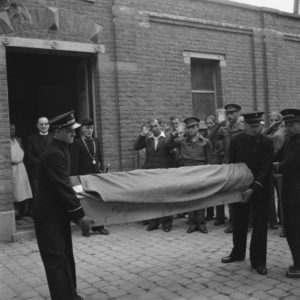
A lijkkleed is a burial pall, the cloth used to cover the coffin. Many churches had a pall that could be rented. The rents were used to benefit the poor. In some cases, the account ledgers of the pall rents survived and can be used as death records. … [Read more...]
Quick tip – New Netherland digitization projects
26 October 2016 by Leave a Comment
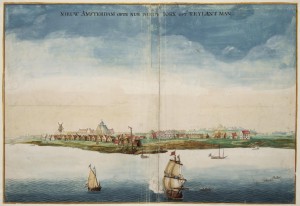
On both sides of the Atlantic, records are being digitized that will help us trace New Netherland ancestors. The New York State Archives is digitizing the New Netherland records. With funds provided by the Dutch government, they are digitizing 9,500 pages of records not already digitized. These include New Amsterdam council minutes, correspondence, Fort Orange records and registers of the Provincial Secretary. Read more about the project at the New York Historical and Biographical Society … [Read more...]
Dutch term – Huwelijkse voorwaarden
24 October 2016 by Leave a Comment
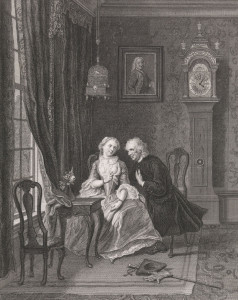
Huwelijkse voorwaarden (literally: marriage terms) is the Dutch term for prenuptial agreement. Historically, like today, most people did not have huwelijkse voorwaarden. Prenuptial agreements were often made by people who were well-to-do or who had children from a previous marriage to provide for. A prenuptial agreement identifies the spouses, sometimes accompanied by family members, and describes how the estate should be divided in case one of them dies. Usually, different scenarios are … [Read more...]
Dutch term – Heksenwaag
17 October 2016 by 1 Comment
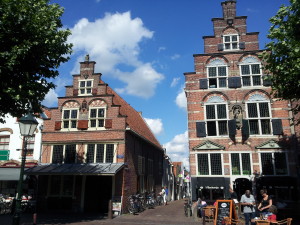
The Heksenwaag was the place where witches were weighed. Witches were known to be lighter than normal, in order to fly on a broom. People accused of witchcraft could go to a heksenwaag to be weighed and receive a certificate declaring them to be of normal weight, which they could then show to their accusers. … [Read more...]
Quick tip – Your ancestors may appear in inventories
12 October 2016 by 1 Comment
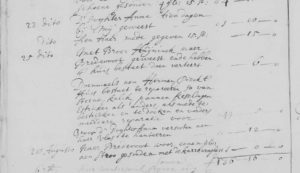
Estate inventories and guardians' accounts often contain information about the daily lives of our ancestors. They can tells us what they owned and whom they did business with. If your ancestor was in trade, he may appear in the inventories of some of his clients. This can give you more insight into his business. Depending on the time and place, you can find estate inventories and guardians' accounts in the voluntary court records, in orphan chamber records, or notarial records. Example: … [Read more...]
Dutch term – Kolonie
10 October 2016 by 1 Comment
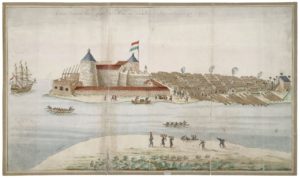
Kolonie is the Dutch word for colony. As a result of the commercial activities of companies like the Dutch East India Company and West India Company, the Dutch had colonies and trade posts all over the world, including: New Netherland in North America, which covered large parts of the current states of New York and New Jersey, where the Dutch obtained furs. El Mina in Ghana, center of the Dutch slave trade in Africa. Cape of Good Hope in South Africa, important stopping point for … [Read more...]
Ask Yvette – Are there Passenger Lists in Dutch Archives?
7 October 2016 by 15 Comments

I often get asked if there are any passenger lists in Rotterdam or Amsterdam, of the people who departed from these ports to America, Canada, or Australia. Depending on the period, there may not be any. Passenger lists often went with the ship and were archived in the port of arrival, not in the port of departure. The archives of the shipping companies sometimes have passenger lists. For example, the Rotterdam City Archives have the archives of the Holland Amerika Lijn and its predecessors, … [Read more...]
Dutch Term – Archief
5 October 2016 by Leave a Comment
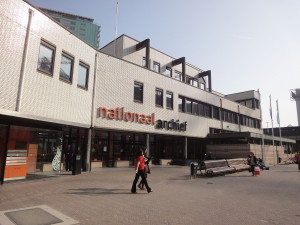
October is archive month, so this week's Dutch term is archief (archive). The word archief has two meanings: The repository that holds records A group of records created by a person or organization as a result of their activities. For example, the Nationaal Archief holds the archief (records) of the West India Company. … [Read more...]
Yvette Hoitink mentioned at BCG website
3 October 2016 by Leave a Comment
The blog of the Board for Certification of Genealogists features Yvette Hoitink as a new associate. … [Read more...]
Dutch term – Verzuiling
30 September 2016 by 1 Comment
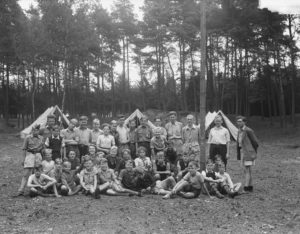
Verzuiling, literally: "pillarization," is the segregation of a society by religion or socio-economic background. By the late 1800s, the Dutch society become increasingly segragated. As a child of Roman Catholic parents, you would not just worship in the Catholic church, but you would also attend a Catholic school, sing in a Roman choir, and join a Catholic gymnastics club. When you grew up, you would vote for the Catholic party, joined the Catholic labor union, and later you would tune in … [Read more...]