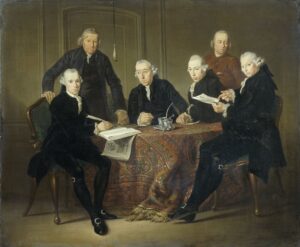
In records, you sometimes see a reference to someone, "voornoemd." That means "aforesaid," the same person as mentioned before. For example, the beginning of the record may introduce Jan Jansen as the guardian of Janna Derksen. Further on in the record they may refer to "Jan Jansen, voornoemd," which refers to the Jan Jansen that was already introduced. … [Read more...]
Dutch term – Verklarende niet te kunnen schrijven
7 December 2020 by Leave a Comment
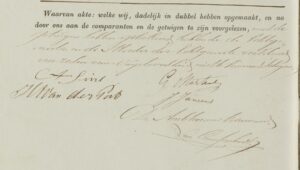
In civil registration records, the informants of birth and death records and the bride and groom and their parents in marriage records, as well as the witnesses, are asked to sign the record. If the people were illiterate, this will be noted in the final sentences of the record. Often you will see a sentence like "verklarende de moeder van de bruidegom uit hoofde van ongeleerdheid niet te kunnen schrijven" [the mother of the groom declares not to be able to sign, as not having learned … [Read more...]
Dutch term – Stemmen
2 November 2020 by Leave a Comment
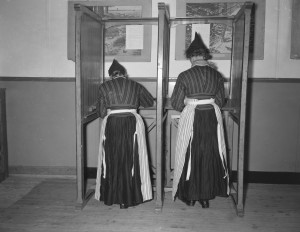
Stemmen means to vote. In the Netherlands, the right to vote was originally tied to owning property or personal wealth. It took until 1917 for all men to be allowed to vote. Women had to wait until 1919. … [Read more...]
Dutch term – Beleg
26 October 2020 by Leave a Comment
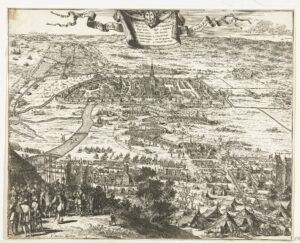
A beleg is a siege. During the Eighty Years' War (1568-1648), many cities were besieged by either Dutch or Spanish troops. In several cases, whole cities were burned to the ground, an in some cases the population was massacred. Read Five Ways the Eighty Years War Affected Your Ancestors for more information. … [Read more...]
Dutch term – Bron
19 October 2020 by Leave a Comment
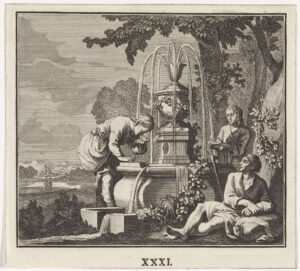
Bron is the Dutch term for "source." The word also means "spring," in the meaning of a place where water naturally comes to the surface. … [Read more...]
Dutch term – Noord, Oost, Zuid, West
12 October 2020 by Leave a Comment
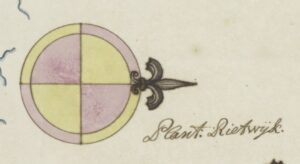
Oost-West [East-West] is the theme of the History Month in the Netherlands this year. The Dutch terms for the cardinal directions are: noord north oost east zuid south west west You may encounter these terms in deeds, where the location of the property is described in terms of its neighbors to the north, east, south, and west. They are also used in geographical names, like Zuid-Holland [South Holland] or Noord-Brabant [North Brabant]. … [Read more...]
Dutch term – Marinier
14 September 2020 by 1 Comment
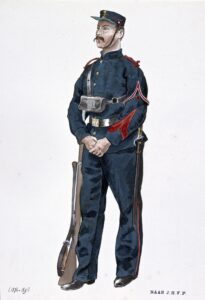
A marinier is a marine. Muster rolls for marines from the period 1813-1940 can be found at the National Archives in The Hague. Some of the records were lost in World War II. The surviving records have been indexed (see "Marine"). See Finding your Maritime Ancestors for more information. … [Read more...]
Dutch term – Armenzorg
7 September 2020 by Leave a Comment
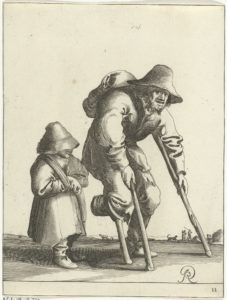
Armenzorg means "care for the poor." You can often find it as a topic in finding aids. See poor relief in the Netherlands in the 1600s for background information about this subject. … [Read more...]
Dutch term – Dominee
17 August 2020 by Leave a Comment
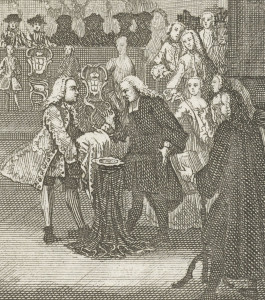
A dominee is a minister, a protestant clergyman. The word comes from the Latin dominus which means "mister" or "lord." Dominees can be found since the reformation in the 1500s. Most of the north-western parts of the Netherlands became Dutch Reformed, while many of the south-eastern parts remained Catholic. Dominees can be found in different types of protestant churches, including Dutch Reformed churches, Christian Reformed churches, Mennonite churches, Anabaptist churches, and remonstrant … [Read more...]
Dutch term – Nedersaksisch
3 August 2020 by Leave a Comment
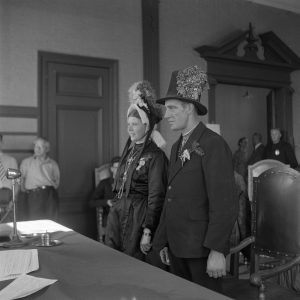
Nedersaksisch is the Dutch word for Low Saxon, a language spoken in the north-east of the Netherlands and across the eastern border in Germany. It has different dialects, including Gronings (in Groningen), Drents (in Drenthe), Twents (east of Overijssel), and Achterhoeks (east of Gelderland). In 1998 it was recognized as an official regional language of the Netherlands, alongside Frisian and Limburgs. Most people who speak Nedersaksisch also speak standard Dutch, though sometimes with an … [Read more...]