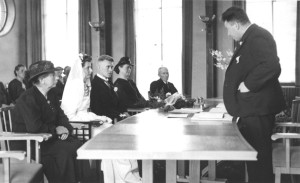
An echtgenoot is a male spouse. The female equivalent is echtgenote. You may encounter the term in death records, where someone is listed as the echtgenoot or echtgenote of someone else. The use of echtgenoot/echtgenote indicates that the spouse is currently living, otherwise the deceased would be listed as the weduwnaar [widower] or weduwe [widow]. … [Read more...]
Dutch term – Tweede Paasdag
5 April 2021 by Leave a Comment
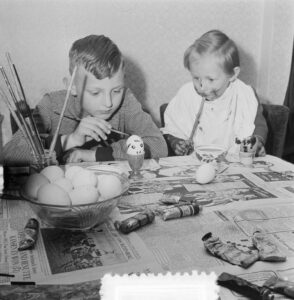
Tweede Paasdag is second Easter day, the day after Easter (Eerste Paasdag/First Easter day). Both days are holidays in the Netherlands. … [Read more...]
Dutch term – Verzamelplan
29 March 2021 by Leave a Comment
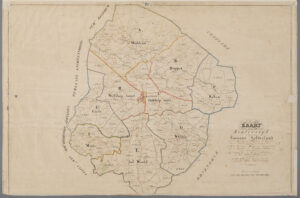
A verzamelplan is a type of cadastral map created in 1832 to show the different sections within a cadastral municipality, and the maps/sheets within each section. See the article about Overview maps and minute maps for more information. … [Read more...]
Dutch term – Landrecht
22 March 2021 by Leave a Comment
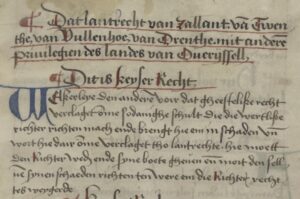
Landrecht is the law of the land. Before the introduction of the civil code in the Netherlands in 1809, each province, region, or domain had their own laws. Understanding the local laws and customs can help you interpret records and understand your family history. … [Read more...]
Dutch term – Eenheidsworst
15 March 2021 by 2 Comments

Eenheidsworst (standardized sausage) has become a proverbial way to say something is run-of-the-mill, not terribly exciting. The original eenheidsworst was introduced during World War I. Even though the Netherlands remained neutral, there were food shortages because overseas supply lines had been cut and much of the food produced in the Netherlands was sold or smuggled to Germany at inflated prices. The government introduced the eenheidsworst, consisting of 90% beef and 10% pork. Because … [Read more...]
Cadastre – Original Indicator Tables
12 March 2021 by Leave a Comment
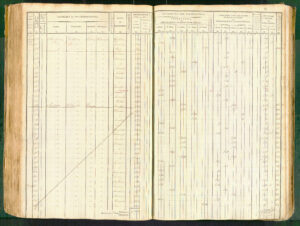
This is the second article in a series about using cadastral records. In the first article, we looked at overview and minute maps that were created when the cadastre was introduced in 1832. These maps show the cadastral municipalities, sections, and plots. This post will show you how to find out who owned each plot. Contents of an original indicator table The oorspronkelijke aanwijzende tafel [original indicator table] recorded the owners of each plot. The tables are organized per … [Read more...]
Dutch terms – Bunder, Roede, El
1 March 2021 by Leave a Comment
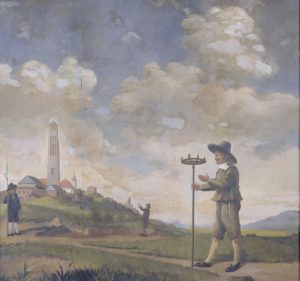
Bunder, roede, and el were measures of land. You can find them in cadastral records and other land records. These terms have been used for centuries, and reflected different sizes in different areas. A bunder was typically 400 or 450 roede. An el was around 68-70 cm (distance from elbow to end of finger) and an el used for a surface area was a square with the sides of an el. In 1816, the metric system was introduced and these terms were given metric measures: Bunder: 10,000 m2 (100 x 100 … [Read more...]
Dutch term – Dienstmeid
24 February 2021 by Leave a Comment
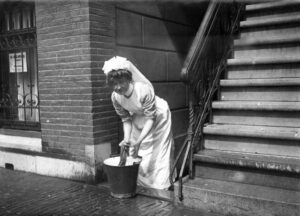
A dienstmeid is a maid servant. The tasks of a dienstmeid depended on the wealth of the family, the presence of other servants or a housekeeper, and whether she worked on a farm or in the city. Tasks typically included cleaning, laundry, setting the fireplaces, etc. Richer households might hire a separate washing woman or cleaning lady, but in many households, this was all the task of one servant. On a farm, a dienstmeid would also be expected to milk the cows, take care of the other animals, … [Read more...]
Dutch term – Vreemdeling
25 January 2021 by Leave a Comment
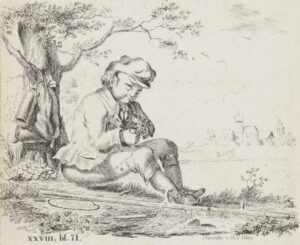
A vreemdeling is a stranger or an alien. The word is used in genealogical records to indicate someone who was not Dutch, an immigrant. Vreemdelingen typically had to register with the municipality. The specific regulations and resulting records depend on the time and place. … [Read more...]
Dutch term – Onbewoonbaar Verklaard
18 January 2021 by 3 Comments

In the early 1900s, a new residence law came in effect to improve the living conditions of poor people. Under this law, houses could be onbewoonbaar verklaard [declared unlivable] and the residents had to move out. … [Read more...]