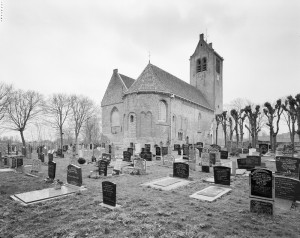
When corresponding with cousins about genealogy, we tend to stick to the close ones: first or second cousins, maybe a third cousin, with the occasional once or twice removed. I recently solved a puzzle using a letter shared to me by a fifth cousin twice removed. I was trying to resolve a conflict in death dates. Her grave said a woman died on 6 December 1879, while I had reliable evidence that her husband was already remarried as her widower by then. The modern design of the grave marker … [Read more...]
Quick tip – No Cousin is Too Distant to Have the Information You Need
10 February 2016 by Leave a Comment
Dutch term – failliet and faillissement
8 February 2016 by 1 Comment
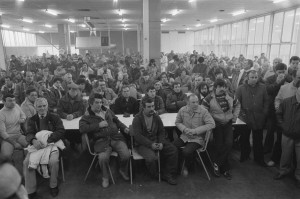
Failliet means bankrupt; faillissement means bankruptcy. You can often find announcements of bankruptcies in newspapers, and you can then find the corresponding court case in the court records in the provincial archives. These may give you an insight in the business relationships of your ancestor. … [Read more...]
Could You Have Been a Teacher in the 19th Century?
5 February 2016 by 4 Comments
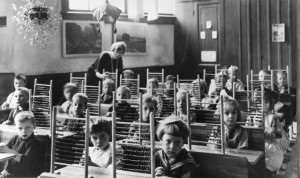
During my research into one of my relatives who was a teacher in the 19th century, I came across some math problems published in a newsletter for teachers. These questions were used during examinations of assistant teachers at elementary schools in 1878. People taking the assistant teachers' exam were usually around 18 years old, had finished their own elementary school with good results and had worked for several years as a trainee, assisting already qualified teachers. Test … [Read more...]
Quick tip – That Frisian female might be male!
3 February 2016 by Leave a Comment
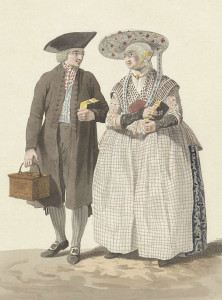
If you do research in Friesland, you will notice that the names there are quite different from the rest of the Netherlands. Friesland has its own language, Frisian (Fries) which comes with its own unique set of names. Some Frisian male names look like female names to those of us who are not from Friesland. Some of these names are used as female names in other parts of the country. If you're unsure whether the person is male or female, check the record to see what the role is (bruidegom/groom, … [Read more...]
Dutch term – Oudoom and Oudtante
1 February 2016 by Leave a Comment
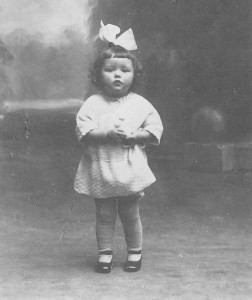
An oudoom is a great-uncle, an oudtante is a great-aunt; siblings of your grandparents. The literal translations are "old uncle" and "old aunt," respectively. … [Read more...]
The ultimate Christmas gift – get it now (yes, really!)
29 January 2016 by Leave a Comment
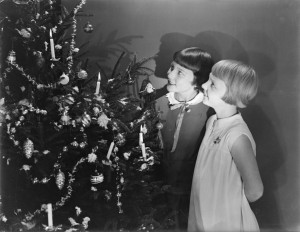
Imagine your family opening a package next Christmas and finding a book about their ancestors. Perhaps they will see their grandparents' marriage record, complete with their signatures. They turn the page to find a postcard from the street where grandmother grew up and a photograph of the church where her family worshiped for centuries. Military records show that great-grandpa was 1.67 m (5'6") tall, with brown hair and blue eyes, and was exempted from military service because of a limp. A … [Read more...]
Quick tip – Share your mysteries online
27 January 2016 by Leave a Comment
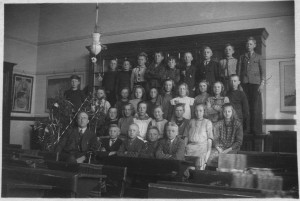
If you have family traditions that you're unsure about, or have questions about your family, try sharing that online in a place where your family members can read about it. You may get the answers to your question. Two years ago, I wrote a tribute to my grandfather on this blog. In the post, I shared how my grandfather and I used to describe the old family photos he had, and how sorry I was that I did not know where these photos had gone after his death. My uncle read that blog post, and let … [Read more...]
Dutch term – Dief
25 January 2016 by 1 Comment
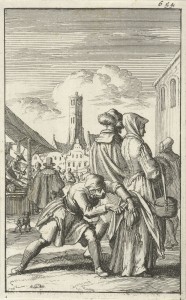
A dief is a thief. You may found out that your ancestor was a thief, or the victim of a thief, in newspapers, court records, prison records or police records. … [Read more...]
Five Things I Learned From Working With Archivists
22 January 2016 by 4 Comments
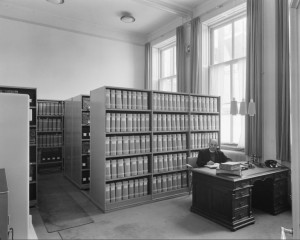
During the past twenty years, I've had the pleasure of working with some wonderful archivists on a range of projects, both in my previous job as IT consultant and project manager at the National Archives and in my current occupation as professional genealogist. I'm not an archivist myself, but picked up some useful tips from them. 1: Context is everything You can't understand a record until you understand it's context. Who created it? Why? When? What were the regulations that led to the … [Read more...]
Quick tip – Occupations ran in the family
20 January 2016 by 4 Comments
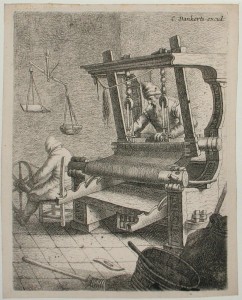
Occupations often ran in the family. The eldest son usually inherited the father's business, and would step in his father's footsteps. Guilds often had friendly terms for children of members, with reduced fees for apprenticeships and membership. Even younger sons who could not take over their father's business often found similar work. The son of a shoemaker might become a tailor, for example. Of course, there are exceptions. The younger sons of farmers may have moved to the village or the … [Read more...]