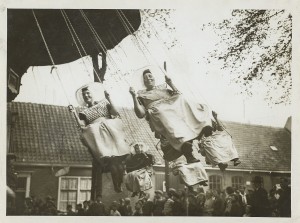
The kermis is the carnival. Most towns have a carnival once of twice a year. The kermis was traditionally a time of courtship, where young folks got together. Some areas had a fair, where young women would line up and young men would select the girl of their choice to take to the carnival and to walk her home at the end of the night. Sometimes they had such a good time that a hasty marriage was scheduled soon afterwards ;-) If your ancestors had a baby within seven months of their … [Read more...]
Column – Reuse
15 January 2016 by 1 Comment
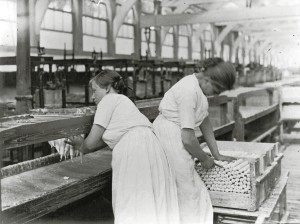
Since 18 July 2015, the Netherlands has a law to regulate the reuse of government information. The law is intended to give an impulse to the economy if government information is used as fuel for new products and services. The law requires archives to cooperate in the reuse of government information. They can only charge the marginal costs for providing copies of the information. Costs that have been made to create the information may not be recouped. Digitized records fall within the … [Read more...]
Quick tip – Most Catholic names end in -us or -a
13 January 2016 by 3 Comments
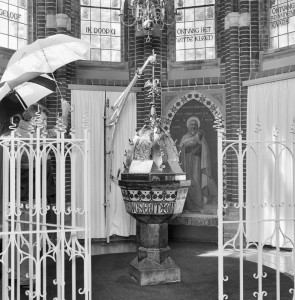
Catholic records were kept in Latin, while civil registration records are kept in Dutch (or French, depending on the time). But Catholic families often recorded the Latin version of the name as the official version with the civil authorities as well. Latin names often ended in -us (for men) or -a (for women). So a person who was called Petrus Josephus in the official records, may well have been called Piet in his every-day life. Here are some other names with their Dutch given names. Men: … [Read more...]
Dutch term – Wees
11 January 2016 by Leave a Comment
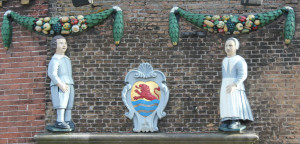
A wees is an orphan. Sometimes you will see the term halfwees [half orphan] or volle wees [full orphan] to refer to a child who lost one or both parents, respectively. While the term wees is nowadays used for a child who lost both parents, in earlier times it could be used for a child who lost one parent. You will see references like "Jan, orphan child of Maria de Wit, assisted by his father Cornelis van Vleuten." Before 1811, some parts of the country had a weeskamer [orphan chamber] that … [Read more...]
Ask Yvette – What is GenealogieOnline?
8 January 2016 by 3 Comments
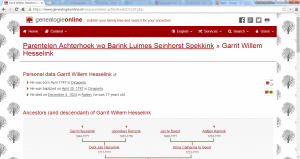
Earlier this week, the Dutch website GenealogieOnline [Genealogy Online] won a Gold Award for genealogy software from GenSoftReview. With a rating of 4.87 out of 5, it scored fourth place. Congratulations! Ancestry subscribers may be familiar with GenealogieOnline from the hints they receive to this website. Several readers have asked me about GenealogieOnline, so I thought I would answer some of the frequently asked questions. What is GenealogieOnline? GenealogieOnline is a website where … [Read more...]
Quick tip – Check the records of neighboring towns
6 January 2016 by Leave a Comment
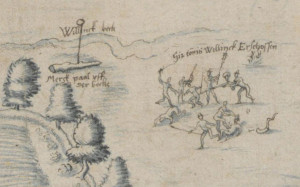
When you're looking for records about your ancestors, don't just limit yourself to the town where he or she lived but also check out the records of the neighboring towns. One of my most amazing finds was a map I found in a German archive, created about a boundary dispute. It showed how my ancestor Tonnis Willinck being shot and killed, around 1593. If I had limited myself to Winterswijk records, I would never have found the image. Read the whole story about the image of Tonnis Willinck's … [Read more...]
Dutch term – Kiesrecht
4 January 2016 by Leave a Comment
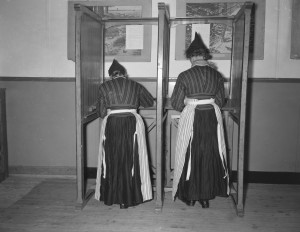
Kiesrecht means suffrage, the right to vote in political elections. In the Netherlands, the first democratic elections were held in 1795, but only a men owning property over a certain value were allowed to vote. It wasn't until 1917 that the right to vote was granted to all men, and women followed two years later. Voter registration records of these first universal elections have survived for several places and can be found in municipal or regional archives. … [Read more...]
Off to Salt Lake City
1 January 2016 by 5 Comments
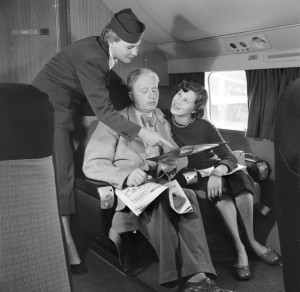
Happy New Year everybody! I'll be starting the year with a great bang, since I will be heading off to Salt Lake City later this week to attend the Salt Lake Institute of Genealogy. I will be taking part in the Advance Evidence Practicum, a hands-on training in solving the hardest puzzles. I will also be attending the Board meeting of the Association of Professional Genealogists and doing some research for my portfolio for the Board for Certification of Genealogists. I'll be flying in on 7 … [Read more...]
Quick tip – New Years’ traditions
30 December 2015 by Leave a Comment
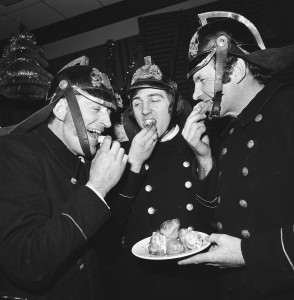
Different areas in the Netherlands have different New Years' traditions. Making a lot of noise is pretty universal. I recall my grandfather showing me his too-short finger on New Year's Eve to warn me about the danger of fireworks. It had cost him the tip of his finger so he only had half a nail. Another one of my ancestors was fined for shooting his gun at midnight on New Years' Eve, the precursor of modern-day fireworks. In the eastern part of the Netherlands, people baked New Years' … [Read more...]
Dutch term – Drost
28 December 2015 by Leave a Comment
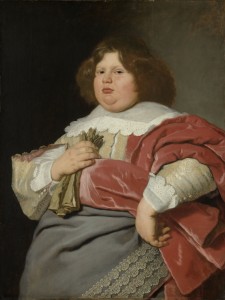
A drost or drossaard was a sheriff, someone who governed a region or town on behalf of the landlord. Some drosten required their subjects to provide special services to him, like feed his horse or do chores twice a year. These were sometimes called drostendiensten (sheriff's services). These services were a relict of feudal regulation in the Middle Ages and were abolished after the French occupation in 1795. … [Read more...]