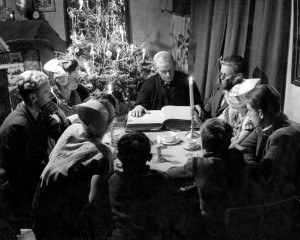
My best wishes to everyone, and Merry Christmas to all my friends who are celebrating Christmas today. It's the time of year to look back and forward. This past year has been a wonderful year for me. It was my first year as a full-time professional genealogist and I've enjoyed myself very much. I've worked on a range a projects covering all of the provinces in the Netherlands except Flevoland, plus former colonies and overseas territories like Surinam, the Netherlands Antilles, New … [Read more...]
Quick tip – Emigrants often used agents
23 December 2015 by 3 Comments
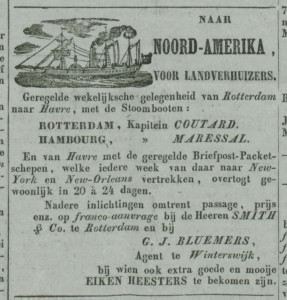
Did you ever wonder how your emigrant ancestors bought their tickets and how they knew where to find a ship to go to America? By the end of the 1840s, many shipping companies had agents in most of the emigration hot spots. Emigrants would be able to purchase tickets form these agents, who would arrange for their travel to the harbor and for the trip across the Atlantic. Agents often advertised in newspapers to make people aware of their services. By searching newspapers for the town where your … [Read more...]
Dutch term – Koekoeksgraad
21 December 2015 by Leave a Comment
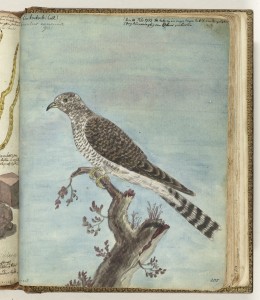
I first heard the word Koekoeksgraad last week and liked it so much that I wanted to share it with you. Koekoeksgraad means "degree of cuckoos," the degree of non-paternity events per generation. I first heard the term in a presentation by forensic DNA expert Maarten Larmuseau, in a Youtube recording of his presentation about using Y-chromosomes to calculate the percentage of "cuckoos," children whose biological father doesn't match the documented line. Their research found that both … [Read more...]
Case study – Working with farm names
18 December 2015 by 4 Comments
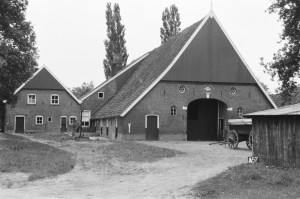
In parts of the provinces of Drenthe, Overijssel and Gelderland, people used to call themselves after the farm they lived on. It wasn't until the introduction of the civil registration in 1811 that their names became fixed. My own name, Hoitink, is an example of such a farm name. Since the name could change every time a person moved, this creates some interesting genealogical puzzles. In this case study, I'm going to give you an example of such a family in my own tree that shows you how to … [Read more...]
Quick tip – Napoleonic army records available online
16 December 2015 by 6 Comments
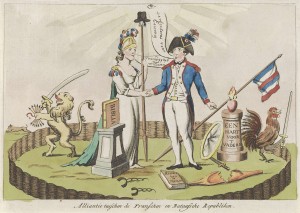
During the French occupation (1795-1813), many Dutch young men were conscripted into Napoleon's army. The French department of Defense has now made scans of the military records for this period online on the "Mémoire des hommes" [Memory of the men] website. The website contains military records of other French soldiers as well, including those who served in World War I, but these won't include many Dutch men. An indexing project is underway, but scans can already be browsed. Go to the … [Read more...]
Dutch term – Schoonmoeder
14 December 2015 by 1 Comment
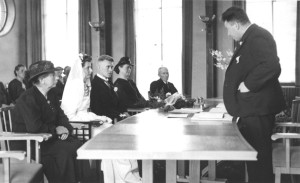
A schoonmoeder is a mother-in-law. In older documents, the term is also sometimes used for stepmother (another type of mother-by-marriage). … [Read more...]
My Attempt to Free Anne Frank’s Diary
8 December 2015 by 8 Comments
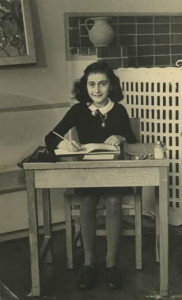
This year marked the 70th anniversary of Anne Frank's untimely death. Under Dutch law, works by an author are in the public domain on 1 January following the 70th anniversary of the author's death. This means that Anne Frank's diary should be in the public domain as of 1 January 2016. However, the Anne Frank Fonds claims that her father, Otto Frank, had significant input as editor of her diary, and that Anne and Otto share the copyright. Since Otto Frank died in 1980, that would extend the … [Read more...]
Sinterklaas Giveaway Winner
8 December 2015 by Leave a Comment
The winner of the Sinterklaas giveaway is Victoria Davis from Texas. She will receive the DVD and syllabus of the "Researching your Dutch Ancestors" webinar. Congratulations, Victoria! All of you who did not win can still view the webinar at the Legacy Family Tree Webinars website. If you're not a member of Family Tree Webinars yet, you need to subscribe first. As a Legacy Family Tree affiliate and the presenter of this webinar, I get a small commission if you subscribe or view the … [Read more...]
Dutch term – Akte van Bekendheid
7 December 2015 by 1 Comment
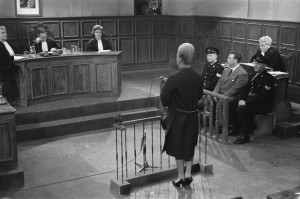
An akte van bekendheid is a record of knowledge, usually a statement by four witnesses who all testify about the truth of something. For example, when people got married after 1811, they had to submit extracts of their birth records and sometimes also extracts of the death records of their parents, former spouses and even grandparents (in the case of under-age orphans). In some cases, these records did not exist and could not be extracted. If they could not produce these records, they drummed … [Read more...]
WieWasWie Introduces Paid Subscription
4 December 2015 by 21 Comments
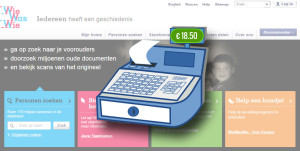
The largest genealogy website in the Netherlands, WieWasWie, will introduce a paid subscription starting 1 January 2016 [Update: this has been postponed to 8 February]. The data can still be accessed for free, but some of the advanced functionality will be behind a paywall. Paid version The following functionality will be behind a paywall: Advanced search options: searching for 2 persons, using wildcards, option "begins with." Saving searches and documents as favorites. Email … [Read more...]