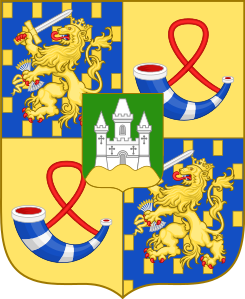
A familiewapen is a family crest or coat of arms. Most people in the Netherlands did not have a coat of arms. People who used them were usually members of the nobility or other members of the upper class. Working class families did not have a use for a crest. There are several heraldic databases and collections that will tell you whether a coat of arms exists for a particular name. Even if you find a crest for your name, that does not mean that your family ever had any right to use it, as … [Read more...]
Column: (Re)searcher
20 June 2014 by 1 Comment
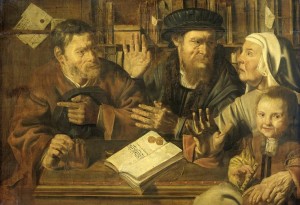
When you've been going genealogy for many years, there are some brick walls that you've just about given up on because you've spent so many fruitless hours tearing them down. But it can be useful to re-evaluate them periodically. Not only will there be new sources available online, but your own skills will have grown too. … [Read more...]
Quick tip: “levenloos” is not a first name
18 June 2014 by Leave a Comment
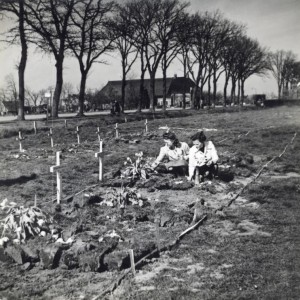
In some trees, you will see the name 'Levenloos' as the first name. However, 'levenloos' means 'lifeless' and is used to indicate stillborn children. Read more about the term levenloos. … [Read more...]
Dutch term – Vader
15 June 2014 by Leave a Comment
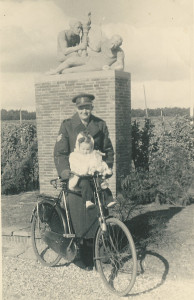
The Dutch word vader means 'father.' Finding fathers can be difficult if the parents weren't married. Some tips: Check the birth record to see if the margin has any notes about the child being recognized by a father later in life. This need not be the biological father but it can be a good clue. Check population registers (since 1850) to see whom the mother was living with. Check church council minutes to see if the mother was censored. Do an autosomal DNA test. This is particularly … [Read more...]
Quick tip: Use Zoekakten.nl to find Dutch records on Familysearch
11 June 2014 by 1 Comment
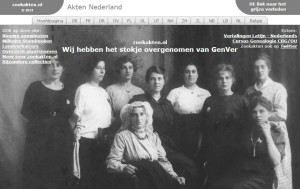
UPDATE: Zoekakten no longer works. See Free alternatives for Zoekakten. Zoekakten.nl is a new website that took over from the popular service Genver.nl. Zoekakten (literally: search records) provides you direct links to record sets of Dutch sources in Familysearch, such as birth, marriage and death records of the civil registration, population registers and baptismal, marriage and burial records from churches before 1811. To find a record, follow these steps: Select the two-letter … [Read more...]
Dutch term – Pinksteren
9 June 2014 by Leave a Comment
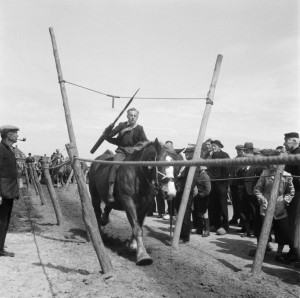
The word 'Pinksteren' is Dutch for Pentacost, a religious holiday. In the Netherlands is it celebrated on Pentacost Sunday and the following day. Pentacost Monday is an official holiday and most of the people in the country have the day off. Nowadays, many people take the opportunity to go to a music festival, go to the beach or attend some traditional fairs. In earlier times, Pinksteren was a typical time when people became confessed members of the Dutch reformed church, together with … [Read more...]
Column: Genealogy police
6 June 2014 by 3 Comments

To me, one of the best aspects of the internet is that it gives everybody a channel to publish whatever they want. No editors that tell you what you can or cannot do, everybody is their own publisher. This has resulted in a wide range of publications, ranging from copy-paste jobs without citations to well-researched works that would not be out of place in a peer-reviewed journal. Due to software that automatically detects 'matches' in other trees and allow you to add these persons to your own … [Read more...]
Quick tip: Podcast interview with Yvette Hoitink
4 June 2014 by Leave a Comment

Dutch Genealogy's Yvette Hoitink was interviewed by Marian Pierre-Louis for the Genealogy Professional podcast series. Listen to the podcast and learn about Yvette's research services and find out what advice she has for other genealogists. The Genealogy Professional Podcast 25 - Yvette Hoitink The Genealogy Professional podcast series is a wonderful resource for professional and non-professional genealogists alike. Every week, another professional genealogist shares information about … [Read more...]
Dutch term – Zomermaand
2 June 2014 by Leave a Comment
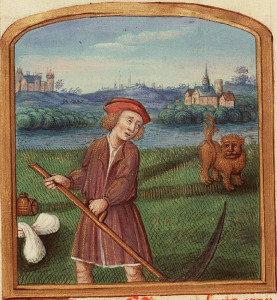
Zomermaand literally means "Summer month" and is the old word for June. … [Read more...]
Not everything is recorded
30 May 2014 by Leave a Comment

Records were not kept with future genealogists in mind. Many of the things you would like to know about an ancestor may not have been documented. As genealogists, we sometimes feel like we have gotten to know our ancestors through the documents, but records still give us just a very partial idea about their lives. As an exercise, please answer these five questions about yourself. Easy, right? Now try to answer these questions for an ancestor that you did not know in person but whom you have … [Read more...]