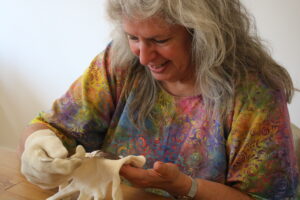
We all know the expression "born with a silver spoon in your mouth." But for one little girl from Friesland, this was almost literally the case. When Geertje Gerrits Heslinga was born on 15 December 1742, her parents had a silver spoon made to commemorate the event. The spoon was engraved with her name and birth date. It is now part of the collection of the Fries Scheepvaartmuseum in Sneek. Such silver spoons were a tradition in Friesland, among richer families. The silversmith is … [Read more...]
Dutch term – Feestdag
23 December 2019 by Leave a Comment

A feestdag (literally: feast day) is a holiday. Traditionally, feestdagen played an important role in our ancestors' lives, and not just the ones many of us know today like Christmas and Easter. Roman Catholic churches had patron saints. The holidays associated with these saints often remained important days for the town, even after the reformation in protestant areas. It might be the day of the annual fair, or when guilds held their elections. My home town of Oldenzaal has a basilica … [Read more...]
Was Eleanor of Aquitaine my Ancestor? Generation 22 – Jan van Wijfliet
20 December 2019 by 8 Comments
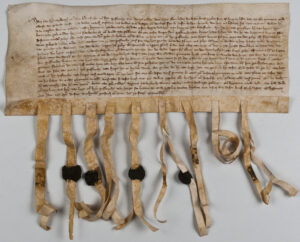
This is the twenty-third post in a series about my possible line of descent from Eleanor of Aquitaine. In the first post, I explained how I discovered the possible line, and how I am going to verify it one generation at a time. In the last post, I proved that my eighteenth great-grandmother Lijsbeth van Mieren was the daughter of Jan van Wijfliet, Lord of Blaasveld. Jan van Wijfliet, son of Duke John II of Brabant The previous phase uncovered a rent for 116 pounds given to Jan van Wijfliet in … [Read more...]
Quick Tip: If they enjoyed it or needed it, there was a tax on it
18 December 2019 by Leave a Comment
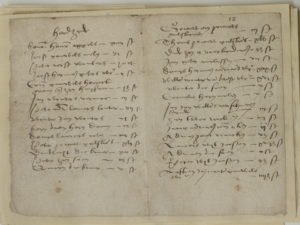
Throughout the history of the Netherlands, various levels of government have taxed items that the residents needed or enjoyed. The taxes vary over time and place. Examples of taxes that have been levied in the Netherlands at different times and places: Hearth tax Salt tax Spice tax Horse tax Mill tax Income tax Real estate tax Asset tax Estate tax (death duties) You can find tax records in the government records of the different levels of government. My … [Read more...]
Ten Trends in a Decade of Dutch Genealogy
13 December 2019 by 1 Comment
As we are nearing the end of the 2010s, I thought it would be nice to look back on the past ten years to see how much genealogy in the Netherlands has changed. 1: Growth of online scans At the start of the decade, many archives had indexes online but often without scans. The drop in prices for scans and storage have caused a great boost to online availability of records. Most archives in the Netherlands have digitized their most popular collections, which typically include the civil … [Read more...]
Dutch term – Hinderwetvergunning
9 December 2019 by Leave a Comment

A hinderwetvergunning is a nuisance permit. The hinderwet [nuisance law] dated from 1875 and set rules about business activities that could provide a nuisance, danger or harm to the environment and required that such businesses needed a permit. The law was replaced in 1993. Examples of businesses requiring a hinderwetvergunning are: Factories Gas stations Cattle farms Slaughterhouses Blacksmiths If your ancestors owned or worked for a business requiring … [Read more...]
Dutch Genealogy News for November 2019
6 December 2019 by Leave a Comment
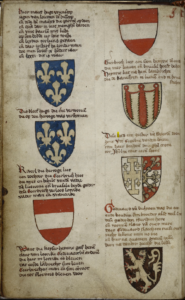
Here is an overview of the new sources, projects, and news about archives that were announced last month. Online sources About half the records from the Aldermen's Court of Tilburg and Goirle (1408-1811) are now available via the Regionaal Archief Tilburg. The Regionaal Archief Tilburg added several more charters to their charterbank. The majority of the charters from before 1550 are now available. THe records of the Sint-Catharinadal priory in Oosterhout (1271-1900) have been … [Read more...]
Dutch term – Baljuw
2 December 2019 by Leave a Comment
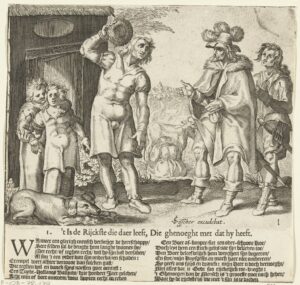
A baljuw [bailiff] was an official who represented the ruler of the region and had the highest jurisdiction. They usually received a fixed salary and a share of the fines. Other terms for this function are drost or drossaard. Baljuws were appointed by the ruler. You can sometimes find these appointments in the records created by the ruler, such as the lord of a domain or the count or duke of the province. … [Read more...]
Source – Bankruptcy files
29 November 2019 by Leave a Comment
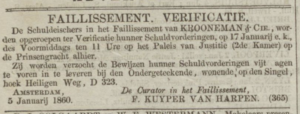
If someone is unable to meet his financial obligations, the court can be asked to declare him bankrupt. The court appoints a curator who inventories the debts and assets of the bankrupt person, who the creditors are, and how they can best be paid. When everything is settled, which could take years, the bankruptcy is ended. Bankruptcy files Records are created of all the actions that happen after somebody is declared bankrupt. Together, these form a bankruptcy files. These files are part of the … [Read more...]
Quick tip – Use Geneal-IX to find Dutch records
27 November 2019 by Leave a Comment
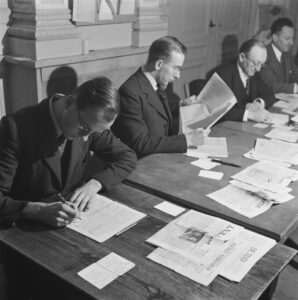
The website Geneal-IX provides handy links organized per province and place to scans of records, including civil registration records, population registers, church records, and address books. These records may be available via FamilySearch or websites of archives. … [Read more...]