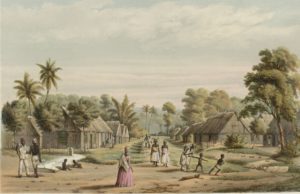
If you are researching enslaved people in the former Dutch colonies like Suriname and the Netherlands Antilles, you need to trace their owners. Enslaved people created few records themselves, but their owners may have created records that mention them. Here are some examples of records created by owners that may include enslaved people: Last wills, disposing of slaves or stipulating their manumission Estate inventories, where slaves are included as property Notarial records … [Read more...]
Dutch term – Studiezaal
18 November 2019 by Leave a Comment
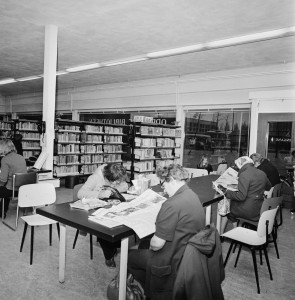
The studiezaal is the reading room. Most archives in the Netherlands have a reading room. Opening hours may vary, some smaller reading rooms are open by appointment only. Thanks to large digitization projects and scanning on demand services, visiting reading rooms in person is often not necessary anymore since most of the research can be done online. Typical reasons for me to visit the reading room are: To access records at a small archive, that doesn't have a lot of information … [Read more...]
Poor relief in the Netherlands in the 1600s
15 November 2019 by 1 Comment
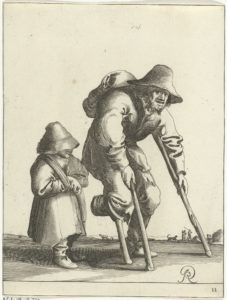
In the 1600s, poor relief was a local affair. There was no national social security system. Larger cities had poor masters who administered a fund to support the poor residents of the city. In the countryside and smaller cities, the deacons of the protestant church had the responsibility to aid people in need. Even people who did not belong to the church were supported. People who were unable to work because of illness, age, or disability received charity. The income of the poor relief … [Read more...]
Dutch term – Sint Maarten
11 November 2019 by Leave a Comment
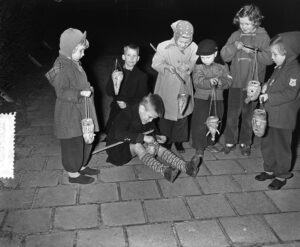
11 November is the feast day of Sint Maarten (Saint Martin). In some parts of the Netherlands, children go door-to-door holding night lights and singing songs. The neighbors would then give them treats. … [Read more...]
Dutch Genealogy News for October 2019
8 November 2019 by Leave a Comment
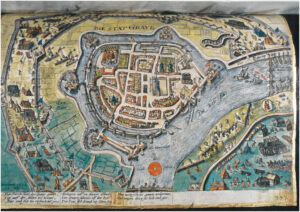
Here is an overview of the new sources, projects, and news about archives that were announced last month. Online sources The Historisch Centrum Overijssel published indexes of birth records of several Overijssel towns: Oldemarkt, Kuinre, Hellendoorn, Oldenzaal, and Hengelo. The indexes can be found on Open Archieven. The slave registers of Suriname for 1830-1863 are online via the website of the National Archives. The period 1851-1863 was already online, but the early registers for … [Read more...]
Quick tip – Don’t rely on automatic translators
6 November 2019 by Leave a Comment
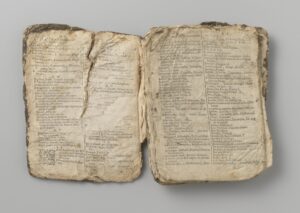
Automatic translators like Google Translate can be a big help if you don't speak Dutch. However, many older records use terms that no longer exist in modern Dutch, or that have shifted meaning. Automatic translators are also notoriously bad at translating words that may have multiple meanings. An example is the sentence: "Zijn neef was zijn getuige" which Google translates as "His cousin was his witness." However, the Dutch word "neef" can mean both cousin and nephew, which can make a big … [Read more...]
Quick tip – Use Past and Next Places in Population Registers
30 October 2019 by Leave a Comment
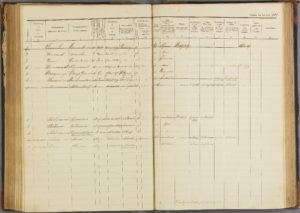
Population registers are a wonderful way to trace where our ancestors were living between 1850 and 1920. The registers give an overview of the people in the household. If someone moved into the household, the register should indicate the previous place of residence. If they moved within the municipality, the previous place will be indicated as their former address or the book and page number. If the person came from elsewhere, it will list the name of the municipality or … [Read more...]
Dutch term: Eigenaar
28 October 2019 by Leave a Comment
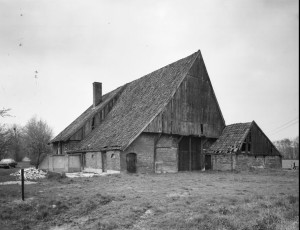
An eigenaar is an owner. Up until recently, many people in the Netherlands did not own any real estate. They were tenants of farms, or rented a house. To find out whether your ancestors owned land, you can check death duties files, notarial records, court records, or cadastral records. For an example of research into property ownership, see Laurens Smulders. … [Read more...]
Source: Emigrants to New Netherland (1650-1664)
25 October 2019 by 3 Comments
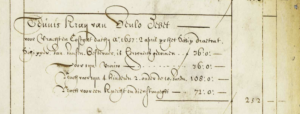
The New York State Archives in Albany houses many colonial Dutch records. Among those records is an account book of the West India Company, which includes payments for passage to New Netherland from 1650 to 1664. This is a great source of information about New Netherland ancestors. Example: Teunis Kraij This entry for Teunis Kraij translates to: Teunis Kraij from Venlo, debit for passage and victuals when he came here on the ship Draetvat [Wire Cask] on 2 April 1657 AD, skipper Jan Jansen … [Read more...]
Dutch term – Kleinkind
21 October 2019 by 1 Comment
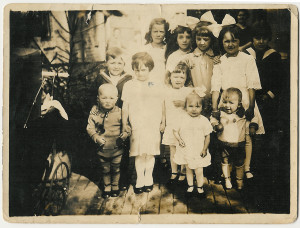
A kleinkind is a grandchild. The term literally translates to "small child." A kleinkind can be a kleindochter (granddaughter) or kleinzoon (grandson). … [Read more...]