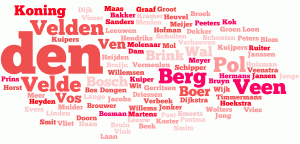
If you can't find the person you're looking for, try searching without the last name. Before 1811, last names were not fixed in many parts of the country. People may appear in records using farm names (in the eastern part of the country) or patronymics (everywhere else), or even under a different last name. By searching for other characteristics, such as the first name of the person you're looking for and their father's first name, you may find people even if they're hiding under a different … [Read more...]
Quick Tip – Dutch Genealogy at The Genealogy Show in Birmingham, UK
24 April 2019 by 1 Comment
Mark your calendars: on 7 and 8 June 2019, The Genealogy Show will be held in Birmingham, UK. There will be two talks featuring research in the Netherlands: On Friday 7 June, John Boeren will give a presentation about "How to Start Your Research in the Netherlands." On Saturday 8 June, Yvette Hoitink will give a presentation about "Dutch Genealogy 101: Finding Your Ancestors from the Netherlands." Please check The Genealogy Show's website for the full program, which include … [Read more...]
Dutch term – Notaris
22 April 2019 by Leave a Comment
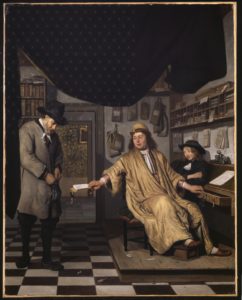
A notaris is a notary. In many parts of the Netherlands, notaries were the record creators for many aspects of our ancestors' lives, for example when they wanted to draw up a prenuptial agreement, a contract to sell property, a work contract, or a will. See the article about notarial records for more information. … [Read more...]
Was Eleanor of Aquitaine my Ancestor? Generation 17 – Barbara Willems Pijlijser
19 April 2019 by 10 Comments
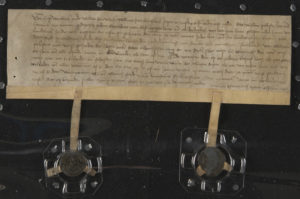
This is the eighteenth post in a series about my possible line of descent from Eleanor of Aquitaine. In the first post, I explained how I discovered the possible line, and how I am going to verify it one generation at a time. In the last post, I proved that my thirteenth great-grandmother Claesken Peters die Paep was the daughter of Peter Claesen die Paep and Barbara Willems Pijlijser. Barbara Willems Pijlijser, daughter of Johanna van Wijfliet Research into Claesken Peters die Paep turned up … [Read more...]
Dutch term – Doodsoorzaak
15 April 2019 by Leave a Comment
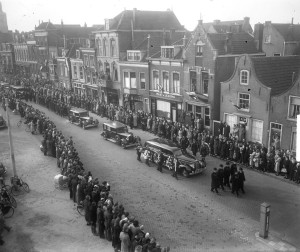
The doodsoorzaak is the cause of death. Dutch civil registration death records don't record the cause of death. See How to find the cause of death for some other possibilities. … [Read more...]
Ask Yvette – What happened to the population registers from the 1900s?
12 April 2019 by Leave a Comment
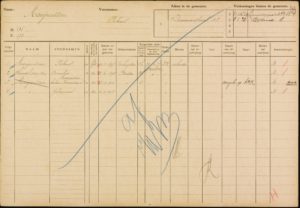
Several readers have asked me about population registers from the 1900s that they used to be able to view, but are no longer available. In May 2018, a new privacy law was introduced that was more strict about sharing information about people who may be alive. As a result, the Association of Municipalities in the Netherlands (VNG) recommended to take the population registers offline, and the archives association BRAIN recommended that they only be made public after 110 years. As a result, most … [Read more...]
Quick tip – “Alhier” and “Elders” are not place names
10 April 2019 by 2 Comments
Sometimes, you will encounter the term alhier and elders in a record to indicate a place of origin or residence. These are not place names, but mean "in this location" and "somewhere else," respectively. Hattip to Ellee Brooks who gave the "elders" tip in a comment. … [Read more...]
Dutch Genealogy News for March 2019
5 April 2019 by 1 Comment
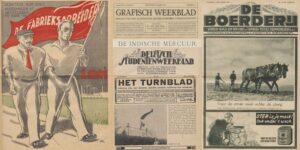
Here is an overview of the new sources, projects, and news about archives that were announced last month. Online sources "Time machines" for various towns in Friesland (Leeuwarden, Sneek, Sloten, Balk, Joure) were added to HisGis. This geographical information system allows you to see who owned which properties through time. Zelandia Illustrata, a collection of the Royal Zeeland Society of Science, has been digitized and published online. The collection contains maps, prints and … [Read more...]
Dutch term – Noaber
1 April 2019 by Leave a Comment
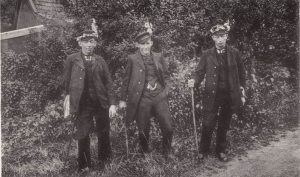
In the Low Saxon dialect spoken in the eastern parts of the Netherlands, a noaber is a neighbor. The duties of a noaber were quite extensive. When a new person moved into the neighborhood, they would expect to be invited for a strong drink. They would help with renovations of the house. During childbirth, female neighbors would assist the midwife and help take care of mother and child after birth. If a person died, the neighbors would help to dress the deceased and put him in his coffin. … [Read more...]
Quick tip – Is that an every-name index?
27 March 2019 by Leave a Comment
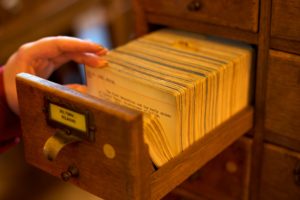
Not all indexes include everybody in the record. Examples of indexes that miss people are: Indexes of baptisms, that include the child and parents but not the witnesses Indexes of deeds, that only index the grantor but not the grantee, or list both the grantor and grantee, but not the neighbors mentioned in the record Indexes of wills, that only include the first testator, but not the spouse. Why indexes may be incomplete Indexing is time-consuming, and there's far more … [Read more...]