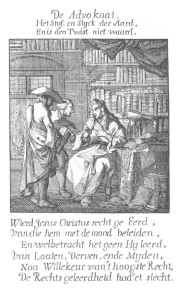
"Naarderschap" is a term you may find in court records if somebody claims the right of first purchase because of kinship to the seller. They could purchase the property by matching the price that other buyers were willing to pay. See also Naastingsrecht. … [Read more...]
Column – Digital Correspondence
22 March 2019 by 1 Comment

"National Archivist wants to store emails and WhatsApp messages," was the headline of the Volkskrant newspaper on 2 January after an interview with National Archivist Marens Engelhard. The records that became public that day were all made of paper, but going forward, digital correspondence also needs to be preserved. Emails of civil servants working on important files—even the WhatsApp messages about the acquisition of Rembrandt paintings. Article 1 of the Archive Law defines archival records … [Read more...]
Dutch term – J.M. and J.D.
18 March 2019 by Leave a Comment
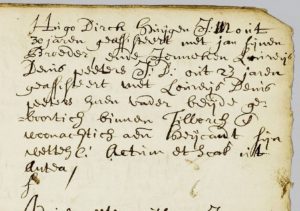
Two abbreviations you may often find in older marriage records are J.M. and J.D. "J.M." stands for Jonge Man, literally: young man. "J.D." stands for Jonge Dochter, literally: young daughter. They refer to the marital status of the person, indicating they are single and this is their first marriage. The word jong/young has no relation to their age. Sometimes, you find J.G. [Jong gezel, approximately: young journeyman or companion] instead of J.M., but the meaning is the same: a … [Read more...]
Was Eleanor of Aquitaine my Ancestor? Generation 16 – Claesken Peters die Paep
15 March 2019 by 6 Comments
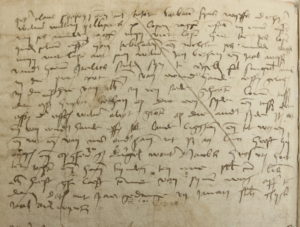
This is the seventeenth post in a series about my possible line of descent from Eleanor of Aquitaine. In the first post, I explained how I discovered the possible line, and how I am going to verify it one generation at a time. In the last post, I proved that my twelfth great-grandmother Barbara Peter Goijaert Pulskens was the daughter of Peter Goijaert Pulskens and Claesken Peters die Paep. Claesken Peters die Paep, daughter of Barbara Willems Pijlijser Research into Barbara Peter Goijaert … [Read more...]
Quick Tip – Browse the Whole Book
13 March 2019 by Leave a Comment
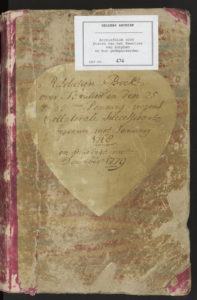
When you're researching a family, indexes may help you to find the exact record you need. But it can be worthwhile to browse the whole book. Here are some things I learned from browsing the whole book: I've found records of my ancestors that I didn't find in the index, either because the name was spelled differently in the record, or because the indexer made a mistake. My ancestors were mentioned as the owners of neighboring property in many deeds that were only indexed by the buyer … [Read more...]
Dutch Genealogy News for February 2019
8 March 2019 by Leave a Comment
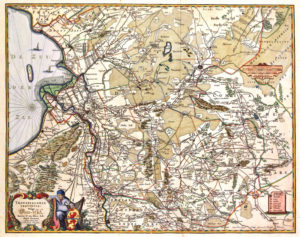
Here is an overview of the new sources, projects, and news about archives that were announced last month. Online sources Over 50,000 people from the eastern part of Gelderland have been added to the index of notarial records of the Erfgoedcentrum Achterhoek en Liemers. This includes records from places with high numbers of emigration, such as Aalten, Lichtenvoorde, Neede, and Winterswijk. Abstracts of the charters and records of the St. Pieter chapter in Utrecht (1040-1528) are now … [Read more...]
Dutch term – Broodzegel
4 March 2019 by Leave a Comment
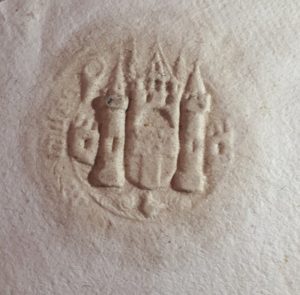
A broodzegel (literally: bread seal) is an old way to seal documents using bread and paper. In the late Middle Ages, smaller wax seals were sometimes covered with paper to help preserve the imprint. Sometimes, bread or dough was used instead of wax. Such a seal would be called a broodzegel. Source: Photo and information from Stadsarchief Rotterdam Facebook post; citing 1-01_2162: Records relating to the case between Gorinchem, Schoonhoven and Rotterdam versus Dordrecht about … [Read more...]
Quick tip – Transfer your DNA to Other Companies
27 February 2019 by Leave a Comment
If you have recent Dutch ancestors, you may not have a lot of matches when you take a DNA test since DNA testing is not that popular in the Netherlands. To increase your chances of finding Dutch cousins, transfer your DNA results to other websites such as MyHeritage, FamilyTreeDNA, and GedMatch. Testing at Ancestry and 23andMe can also increase your chances of finding matches, since those companies don't accept uploads. See the article Dutch DNA Testing Strategy for more information. … [Read more...]
Dutch term – Elders
25 February 2019 by 2 Comments
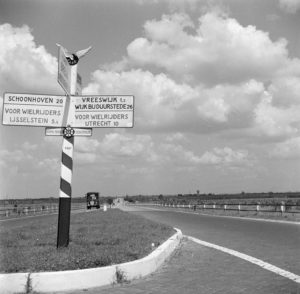
Elders means "somewhere else." You can encounter the term in church records, court records, or notarial records, to indicate that somebody is absent, or in a phrase like elders getrouwd [married somewhere else]. … [Read more...]
Quick tip – Were there children of the first marriage?
20 February 2019 by Leave a Comment
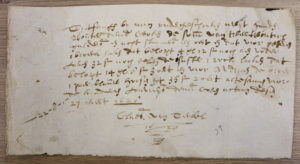
If a person wanted to remarry after becoming a widow(er), they first had to come to an arrangement with the children of the prior marriage. These arrangement are often registered in court records, orphan chamber records, or notarial records, often around the time of the publication of the banns of the second marriage. They can provide a wealth of information about family members and the economic circumstances. See the article about the parents of Aleid Laureijs Coolen. A receipt for her … [Read more...]