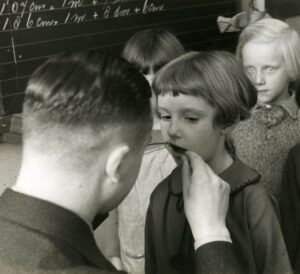
A tandarts is a dentist. Dentists used to travel around for services at regional fairs. It did not become a regular medical profession until the twentieth century. By the 1930s, dentists started coming into schools to make sure the children's teeth were in good health. … [Read more...]
Dutch term – Bladeren
4 October 2021 by Leave a Comment
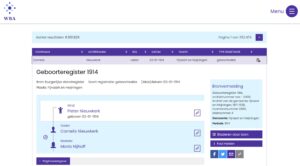
Bladeren means to browse, to turn the pages of a book. You may encounter the term on a button or link when you are using a genealogical website where the index is attached to the whole book rather than to the specific page. By clicking "Bladeren," you will open the book and can look up the page using the details in the index. … [Read more...]
Dutch term – Kaasmarkt
27 September 2021 by Leave a Comment
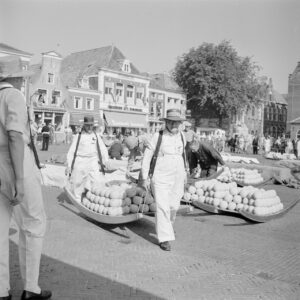
A kaasmarkt is a cheese market. Many towns in the west of the Netherlands are famous for their cheese, like Gouda and Edam. These towns have their own cheese markets, though the most famous cheese market is in Alkmaar. … [Read more...]
Dutch term – Nettenboetster
20 September 2021 by Leave a Comment
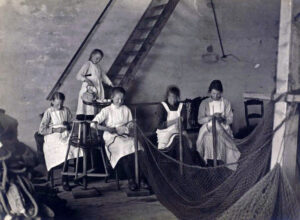
A nettenboetster was a female worker who made or repaired fishing nets. It was typically a job for young girls in fishing villages to supplement the family's income. … [Read more...]
Dutch term – Staking
13 September 2021 by 1 Comment
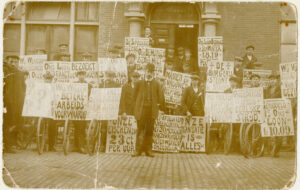
A staking is a strike. Local strikes have been documented since the sixteenth century. Strikes became more common in the twentieth century, when workers were becoming organized. Major strikes include: 1902: Textile strike in Twente (eastern part of Overijssel) 1903: Railway strike 1941: February strike in protest to start of deportation of the Jews by the German occupiers … [Read more...]
Dutch term – Holland
6 September 2021 by 1 Comment
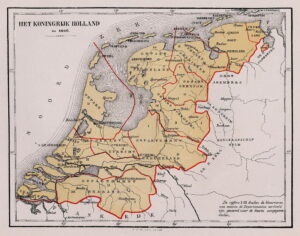
One of the best-known Dutch terms is Holland. Unsurprisingly, it means "Holland." But Holland can refer to different things: Many people abroad use Holland when they mean the country of the Netherlands. For a long time, the Netherlands used it in international communication. Even the Dutch themselves use it when they cheer on the national soccer team: "Hup, Holland, Hup!" [Go, Holland, go!] Dutch immigrants are often identified as being from "Holland" in records in other countries, for … [Read more...]
Dutch term – Loopgraaf
30 August 2021 by Leave a Comment
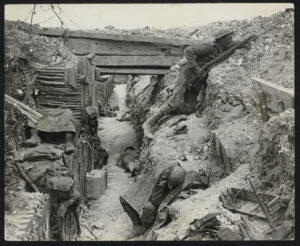
A loopgraaf is a trench. They were most famously deployed in World War I, when the Netherlands was neutral, but also in other wars. … [Read more...]
Dutch term – Kelder
23 August 2021 by Leave a Comment
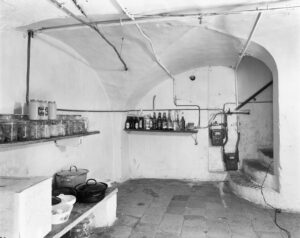
A kelder is a cellar. Kelders were usually used for cold storage, typically accessible from the kitchen. You can come across the term in estate inventories that list the contents of a house by room. Some modern houses have a kelderkast [cellar closet/cupboard] that is usually just storage under the stairs rather than a real cellar. … [Read more...]
Source – Records of the municipality
20 August 2021 by 2 Comments
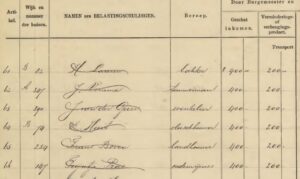
In 1812, the Netherlands had more than 1,100 different municipalities. Since then, many have merged so we have about 350 left. See the Gemeentegeschiedenis website for an overview of all the municipalities that ever existed. Each of these municipalities created a wide range of records. Typical categories include: Records created by mayors, aldermen, municipal council, such as minutes of meetings, correspondence, municipal reports Various departments within the municipality … [Read more...]
Dutch term – Minuutplan
16 August 2021 by Leave a Comment
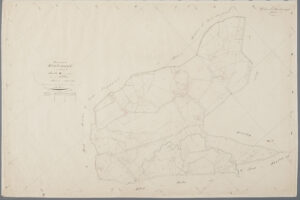
A minuutplan is a type of cadastral map created in 1832 to show the different plots within a section. Most sections were too large to display in one map, so there were often multiple minuutplans per section. See the article about Overview maps and minute maps for more information. … [Read more...]