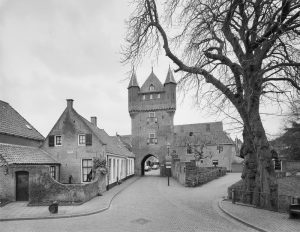
The stadspoort is the city gate. Until modern times, most cities had a wall around it, with gates protecting the entrance ways. Most towns had a portier or gatekeeper that was responsible for opening and closing the gates each day. … [Read more...]
Quick tip – Dutch Genealogy Facebook page
8 March 2017 by 1 Comment
Do you follow DutchGenealogy.nl on Facebook already? On the Facebook page, you can read all articles from the blog plus posts from other websites relating to Dutch genealogy and Dutch culture. Other ways to read the articles on DutchGenealogy.nl are the website, e-mail newsletter, Twitter, and RSS using an RSS-reader like Feedly. … [Read more...]
Dutch term – Bruiloft
6 March 2017 by 4 Comments
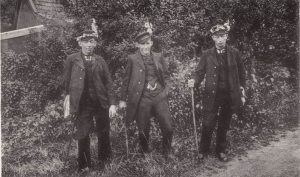
A bruiloft is a wedding. Different regions have different wedding traditions, and they also changed over time. The area of Twente in Overijssel, where I grew up, has some peculiar wedding traditions. Other regions have similar or slightly different traditions, but I thought I would share some that I experienced myself. Even in my generation (born in the 1970s), I knew a few girls who would start their trouseau as a teenager. They started asking for plates and linens from their twelfth … [Read more...]
Dutch and New Netherland Records Online in February 2017
1 March 2017 by 1 Comment
The following records from the Netherlands have become available online: FamilySearch published a new collection, "Netherlands, Archival Indexes, Miscellaneous Records." This collection contains indexes from Open Archives which publishes genealogical records that are made available as open data by the Dutch government. In many cases, the Open Archives website includes links to the images of the original records. This means these indexes are now available as … [Read more...]
Dutch term – Pieremagoggel
27 February 2017 by 2 Comments

A pieremagoggel is a vessel, but not a boat since it cannot have a keel. The term is sometimes used to denote a ship that was no longer considered sea-worthy. Other pieremagoggels are built for fun, rather than any practical applications. Pieremagoggel contests score the vessels based on their creativity, and ingenuity of the propulsion mechanism, humor, and esthetics; with winners in different categories. It is not surprising that students of polytechnic schools often enter … [Read more...]
Dutch term – Dijkwerker
22 February 2017 by Leave a Comment
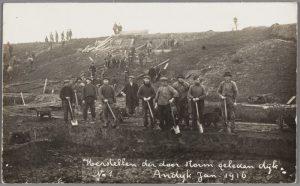
A dijkwerker is a dike worker, somebody who creates and maintains dikes. In earlier times, people in a community that was protected by a dike would be required to help maintain the dike. Later, this was changed to a tax that paid professional dike workers to maintain the dikes. Taxes still pay for the upkeep of the dikes today. … [Read more...]
Crowd funding needed for Suriname Slave Registers
20 February 2017 by 1 Comment
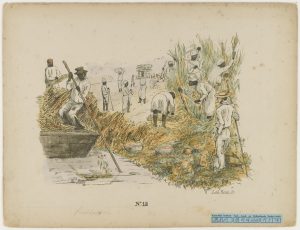
A crowd funded project will digitize and index the slave registers of Suriname, making them freely accessible online. Slave registers of Suriname The slave registers of Suriname are a unique record series. They record the names of approximately 80,000 people who were enslaved in Suriname between 1830 and the abolition of slavery in 1863. I don't think there is another country in the world that had such a comprehensive registration of its enslaved … [Read more...]
Quick tip – Beta version of WieWasWie
15 February 2017 by 12 Comments
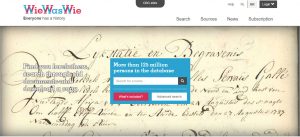
WieWasWie, the website where many Dutch archives publish their indexes and scans of genealogical sources, has a new website. It is in beta, which means that they are looking for user feedback. Try the beta version of WieWasWie … [Read more...]
Dutch term – Geregistreerd Partnerschap
13 February 2017 by Leave a Comment
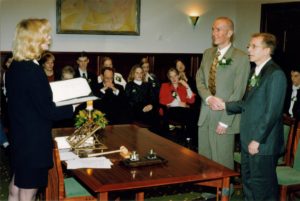
"Geregistreerd partnerschap" or registered partnership is a form of a civil union. It was introduced in the Netherlands in 1998 to allow same-sex couples to enjoy some of the same rights as married partners. The partnership is not limited to same-sex couples though: Male and female partners can also join in a registered partnership. The Geregistreerd Partnerschap can be seen as the predecessor of the same-sex marriage, which became legal in the Netherlands in 2001; the first country in the … [Read more...]
Quick tip – Civil Cases can Contain Earlier Records
8 February 2017 by Leave a Comment
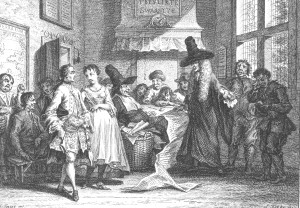
Civil court cases can be a treasure trove of information. To support their claims, the parties may have had copies made of records that were kept in their family, or perhaps drew maps to show a boundary dispute. In my own tree, I was able to prove the parents of a woman who married around 1677 by going through a civil case involving the inheritance of her grandson in 1710. The case file included prenuptial records of several family members, including the woman I was looking for. The … [Read more...]