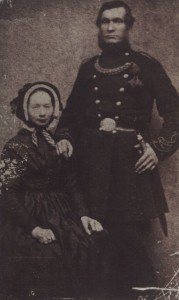
A veldwachter was a police constable. In 1858, a national police force was established in addition to the municipal constabulary. From that period onwards, you will find a difference between a gemeenteveldwachter (municipal constable) and rijksveldwachter (national constable). Appointments of national constables can be found in the Staatscourant, which is available online at Delpher, or in the Algemeen Politieblad, which is available at the website of the Centraal Bureau voor Genealogie … [Read more...]
Dutch Genealogy Article in the National Genealogical Society Quarterly
1 February 2017 by 5 Comments
I am proud to announce that my article "Griete Smit's Parentage: Proof in the Absence of Vital Records" has been selected as the lead article of the December 2016 issue of the National Genealogical Society Quarterly. NGS members can download the PDF from the NGSQ archives. The journal is also available in many libraries in the United States and some major libraries elsewhere in the world. The National Genealogical Society Quarterly is known for its case studies, which teach sound research … [Read more...]
Dutch term – Rechtszitting
30 January 2017 by Leave a Comment
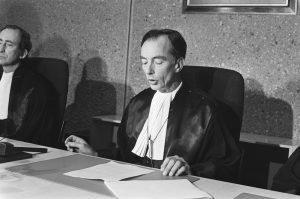
A rechtszitting is a court session. The protocols of the sessions can have detailed information about the charges, defense, and witness statements. Court records can often be found in regional archives. Some archives have put indexes online. Check the Digital Resources Netherlands and Belgium website to find out which sources are online for the region you're looking for. … [Read more...]
Source – Notarial records
27 January 2017 by Leave a Comment
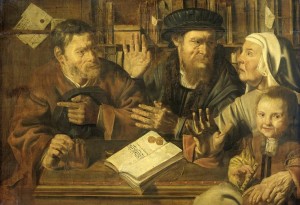
Notarial records are created by a public notary and serve as legal proof of the information contained in the record. Information in notarial records Examples of the types of records you can find in notarial archives are: Real estate transactions (sales, conveyance) Debts Obligations Auctions Prenuptial agreements Last wills Estate divisions Work contracts Replacement contracts for enlisted men Powers of attorney A notary created copies of most of the records … [Read more...]
Quick tip – How did they get that property?
25 January 2017 by 1 Comment
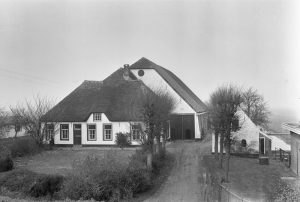
If your ancestors owned property, that might help you find out more about them. If you cannot find the original purchase, they may have inherited it from a family member. By tracing the property, you may discover an earlier generation. The names of properties are rarely indexed, but perhaps you can find the neighbors, and check their deeds. Otherwise, browsing the whole register can sometimes be helpful. … [Read more...]
Dutch term – Probant
23 January 2017 by 1 Comment
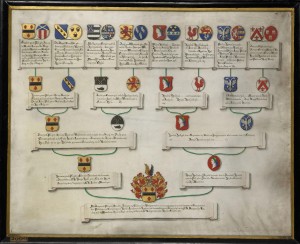
The probant or proband is the home person in a chart or narrative of the ancestors of the person. In the Sosa-Stradonitz numbering system, the proband has number 1, his father number 2, mother number 3, et cetera. … [Read more...]
Types of Dead Ends in a Dutch Tree
20 January 2017 by 8 Comments
I don't call an ancestor a "brick wall" until I feel that I've exhausted the research options. Instead, I prefer "dead end" to indicate ancestors for whom I have not identified the parents yet. I have about two thousand ancestors in my tree for whom I have not identified both parents. To give you an idea of the types of problems you can run into when researching Dutch ancestors, I will discuss the different types of "dead ends" in my tree. Fathers of illegitimate children My most … [Read more...]
Quick tip – How to Find out Which Church Records Survive
18 January 2017 by Leave a Comment
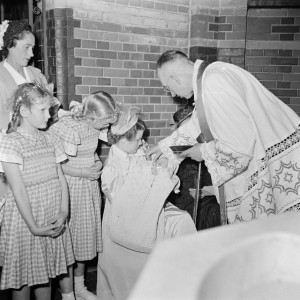
Church records of baptisms, marriages, and burials are among the most popular genealogical sources to use. If you can't find a record, how do you know if the records don't exist anymore, or if you simply haven't found the person? In 1981, a book was published to help researchers, the Repertorium DTB. For each town, it lists the surviving records per denomination. Where to find the overview of Dutch church records The book is available online at the website of the Centraal Bureau voor … [Read more...]
Dutch term – IJzen
16 January 2017 by 2 Comments
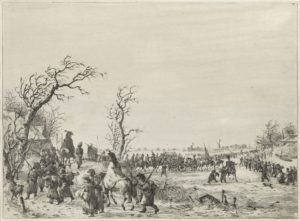
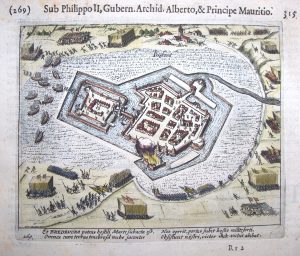
IJzen means to break the ice. During wartime, the ice in the moats around fortified towns had to be broken up, to prevent hostile forces from walking over the moat to take the town. Sometimes, ijzen was the obligation of the citizens of the town, or of specific farmers in the area who rented the farm from the overlord. In other towns, the garrison was responsible for making sure the moat did not freeze shut. … [Read more...]
Source – Publication of the banns
13 January 2017 by Leave a Comment
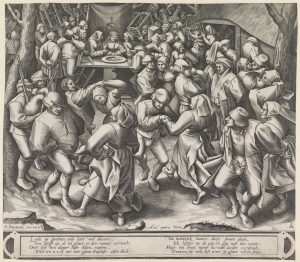
In the Netherlands, you have to go in "ondertrouw" before you get married. This means that the banns are read, giving everyone in the community a chance to object to the marriage. In the period before the introduction of the civil registration, church records are the most important source of vital information. Many churches recorded the banns rather than the marriage. They recorded when the couple registered the banns, and sometimes noted the marriage announcements on three different times, … [Read more...]