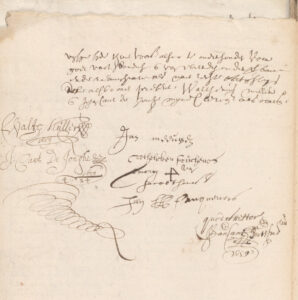
In some cases, couples made a prenuptial agreement when they married. Often, this was the case when at least one of the spouses had assets to protect, or when one of the spouses was richer than the other. The typical arrangement was that if one of them died without children, that person would receive a sum of money while the survivor kept the rest. The sum reflected each spouse's financial situation at the start of the marriage. Another reason to make a prenuptial agreement is if one or both of … [Read more...]
About this website
Creating a website like this is a fun activity. There are so many options, so many choices. What do visitors want? What do I want? In this blog I will describe some of the things I encounter in developing and maintaining this website.
Eight Dutch Naming Patterns to Watch Out For
27 November 2020 by 4 Comments
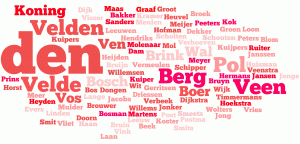
Understanding how Dutch people named their children or themselves will help you solve your family mysteries. Here are eight Dutch naming patterns to watch out for. Naming children after grandparents Many Dutch children were named after their grandparents, often in a specific order: the first son after the paternal grandfather, second son after the maternal grandfather, first daughter after maternal grandmother, second daughter after paternal grandmother. After the grandparents were named, … [Read more...]
Video – Black in Rembrandt’s Time
23 November 2020 by Leave a Comment
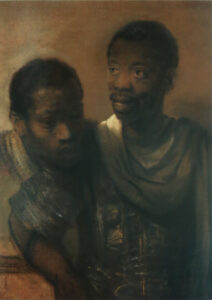
Museum Rembrandthuis created an exhibition "Black in Rembrandt's time." Rembrandt portrayed several black people in his paintings and drawings. The museum has brought these portraits together. This video gives a virtual tour of the exhibition. Closed captions are available in English. https://www.youtube.com/watch?v=yTRI161zY_g … [Read more...]
Silk WWII Escape Map
20 November 2020 by 6 Comments
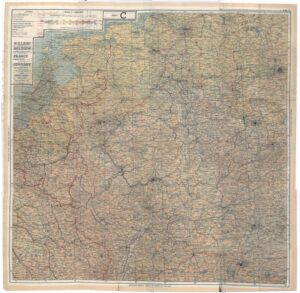
In World War II, pilots and their crew took cloth maps on missions over enemy territory to be able to find their way back in case they wound up behind enemy lines. Cloth maps don't tear when they get wet or make noise and can be hidden more easily than paper maps. Most of them were made from silk or rayon. … [Read more...]
Call for Papers – Dutch American Stories
16 November 2020 by Leave a Comment
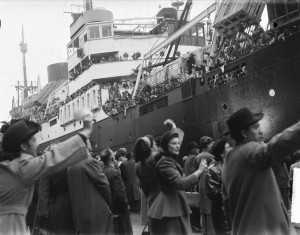
AADAS, the Association for the Advancement of Dutch-American Studies, has issued a call for papers for their virtual conference on 18-19 June 2021. The theme of the conference is Telling, Sharing, and Preserving Dutch-American Stories. Read the Conference Call for details. … [Read more...]
Quick Tip – Launch of Database “Voyages of New Netherland”
11 November 2020 by Leave a Comment
On 17 November, a new online database "Voyages of New Netherland" will be launched. It documents 300 ship voyages to New Netherland between 1609 and 1664. The New Netherland Institute and New York Genealogical and Biographical Society organizes a virtual launch session on 17 November 2020 at 5 PM. See the NYG&BS website for more information and registration. … [Read more...]
New book: Dutch Children of African American Liberators
9 November 2020 by Leave a Comment
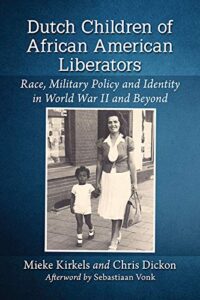
A new book was just announced, written by Mieke Kirkels and Chris Dickon: Dutch Children of African American Liberators: Race, Military Policy and Identity in World War II and Beyond. … [Read more...]
Dutch Genealogy News for October 2020
6 November 2020 by Leave a Comment
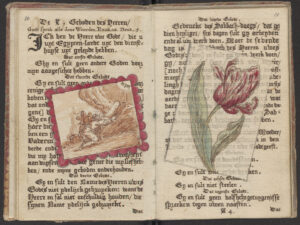
Here are new websites and sources that were announced last month. Sources The Brabants Historisch Informatie Centrum added several indexed and scanned notarial records from the east of Noord-Brabant from 1900-1925 to their website. See their announcement for a full list of places and dates. The New York State Archives created a new research guide with links to scans, translations, and published translations of their New Netherland records. The Regionaal Archief Tilburg scanned … [Read more...]
Archives to close again
4 November 2020 by Leave a Comment
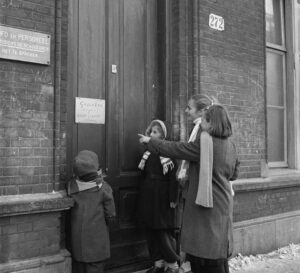
Due to new COVID-19 measures, all archives, libraries, and museums in the Netherlands will be closed for a minimum of two weeks from 5 until 19 November 2020. After that, some will reopen by appointment while others will remain closed for the time being. The websites of the archives should remain functional. Check the website of the archives to see what if any other services, like scanning-on-demand, they still provide. … [Read more...]
Quick Tip – Spanish Flu in the Netherlands
28 October 2020 by Leave a Comment
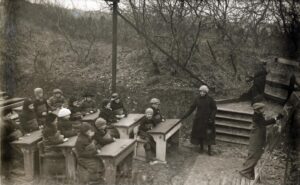
The Spanish Flu epidemic of 1918 hit the Netherlands hard. Researchers have now used the information from civil registration records to analyze the data, including providing maps that show which areas were most affected. Unlike what you might think, rural and less densely populated areas were hit harder than the big cities. Read the analysis of the 1918 Spanish Flu epidemic … [Read more...]