This is my third post answering the questions asked by viewers of my "Researching Your Dutch Ancestors" webinar. In this post, I will answer questions about Dutch names. What are patronymics? Patronymics are names that are derived from the father's name, like Jansen = son of Jan. In some parts of the Netherlands, people did not have a hereditary surname before the introduction of the civil registration in 1811. Read more about patronymics. What were the naming patterns? Most Dutch children … [Read more...]
Quick Tip – The Pull of the Dutch East and West India Companies
14 October 2015 by Leave a Comment
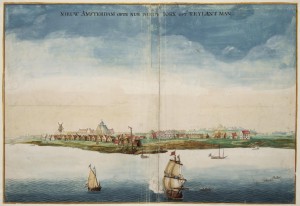
The Dutch East India Company and West India Company attracted workers from all over Europe. Many came from the German states or the Baltic. So if your ancestor was employed by one of these companies and settled in the West Indies, South Africa, New Netherland or the East Indies, it is possible that they were not Dutch at all. … [Read more...]
Dutch term – Dienstbode
12 October 2015 by 1 Comment
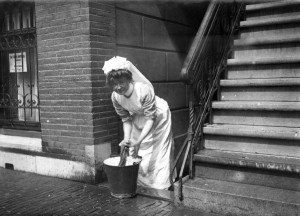
A dienstbode was a domestic servant. Many dienstbodes lived with the families where they served. Because dienstbodes moved a lot, many municipalities started keeping seperate "dienstbodenregisters" [registers of domestic servants] as part of the population registration to keep track of who lived where. … [Read more...]
Column – Everything online?
9 October 2015 by 4 Comments
About twenty years ago, I gave a lecture about internet genealogy. Internet was in its infancy. I could answer the question "Do you think archives will ever put everything online?" with a negative. The hundreds of miles of archives would be too extensive to digitize. I also figured that repositories would be hesitant to give up their monopoly on records access. Thankfully, I was wrong. That is not to say that everything is available online, far from it. But we have made great strides and … [Read more...]
Quick tip – Naming Traditions May Vary
7 October 2015 by Leave a Comment
Many genealogists know that Dutch children were usually named after their grandparents. But the order in which children were named can vary between regions, religions and also in different periods. In some cases, the maternal grandmother took precedence over the paternal grandmother. Also, parents sometimes only named children after deceased family members. For example, in the eastern part of Gelderland I found that in the 1600s, most families only named children after the grandparents if … [Read more...]
Dutch term – Overlijdensakte
5 October 2015 by 1 Comment
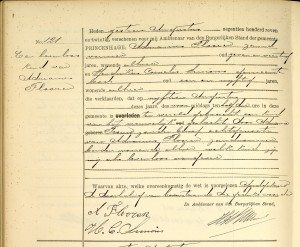
An overlijdensakte is a death record. In most of the Netherlands, deaths have been recorded in death records of the civil registration since 1811. Before that, burial records kept by the churches are usually the best information available for finding out when someone died. Read more about death records. … [Read more...]
Dutch Genealogy Webinar – Questions about Immigrant Ancestors
2 October 2015 by 1 Comment
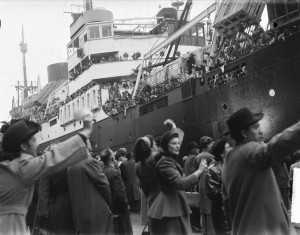
This is my second post answering the questions asked by viewers of my "Researching Your Dutch Ancestors" webinar. In this post, I will answer questions about finding immigrant ancestors. A good general strategy for finding immigrant ancestors is outlined in my article How to find my immigrant ancestor in the Netherlands? How do you trace your Dutch ancestor if you don't know when and were they arrived? This viewer had ancestors who arrived in the colonies in the 1700s. For these early … [Read more...]
Quick tip – The Dutch Language Changed a Lot
30 September 2015 by Leave a Comment
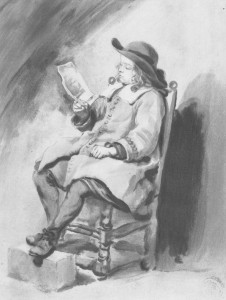
The Dutch language changed a lot these past centuries. It's not just the script - the words themselves changed a lot too. Most Dutch people today struggle to understand a text from the 1600s, even if it's reprinted. This explains why automatic translators like Google Translate or Chrome struggle to understand archaic Dutch. They often don't produce anything that is comprehensible in English, and may change the meaning. The correct interpretation of all terms in a document is often vital to … [Read more...]
Dutch term – Doodloper
28 September 2015 by 1 Comment
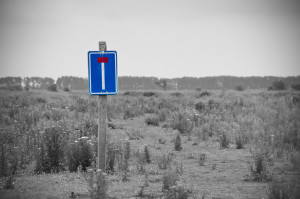
A doodloper (literally: dead walker) is a dead end, a term Dutch genealogists use for an ancestor for whom we haven't found the parents yet. They are the end points in your family tree. A doodloper is similar to the English term "brick wall ancestor," but subtly different. "Brick wall" is generally used for ancestors who are seemingly impossible to find, even after a lot of research has been done. A doodloper can simply be an ancestor for whom you haven't done much research yet; it's the end … [Read more...]
Source: Borgbrief (Bond letter)
25 September 2015 by 3 Comments
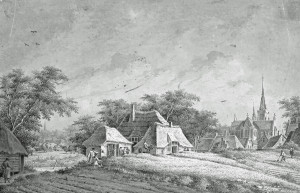
Before the mid 1800s, if you wanted to move to a new place, you had to provide proof that you would not be a liability to the town. You would be required to submit a bond letter to the authorities, wherein the poor administration or civil authorities of your previous town declared that they would take care of you if you became poor. These letters were called "borgbrieven" [bond letters] or "akte van indemniteit" [record of indemnity] and can be a wonderful source of information about migration … [Read more...]