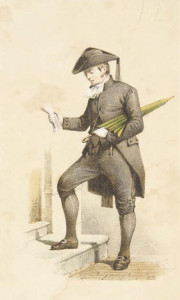
An aanzegger is a person who goes to inform neighbors and friends that someone has died. Traditionally, aanzeggen was done by a close neighbor, but in some regions it became custom to hire someone for the task. … [Read more...]
Dutch Genealogy Webinar – Questions about Locations
6 November 2015 by 1 Comment
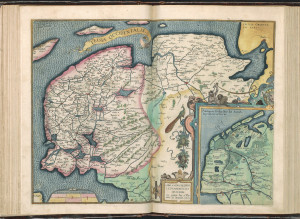
This is my fourth and final post answering the questions asked by viewers of "Researching Your Dutch Ancestors" webinar. In this post, I will answer questions about locations. Are Holland and the Netherlands the same country? Holland is an alternative name used for the Netherlands, but the official name is The Netherlands. View this video for an explanation: Where there Holland boundary changes since the 1600s? There were major changes in the southern provinces, due to the Eighty Years' … [Read more...]
Quick tip – Religion affected more than just the church they attended
4 November 2015 by 1 Comment
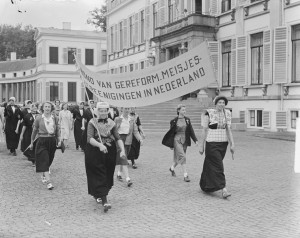
Religion did not just determine where people went to church, but also whom they hung out with. It determined where children went to school, what choirs they sang in and what gym clubs they joined. People met their partners in church and formed friendships and family bonds that survived emigration to other countries. See this overview of popular destinations per religion to see where some groups went. … [Read more...]
Dutch term – Vonnis
2 November 2015 by Leave a Comment
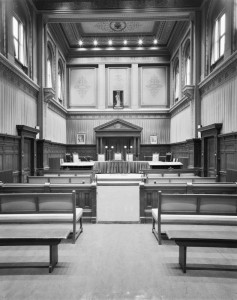
A vonnis is a verdict by a court. You can find vonnissen in court records, which are mostly not available online. … [Read more...]
A (Reverse) Witch Trial in Winterswijk
30 October 2015 by 3 Comments
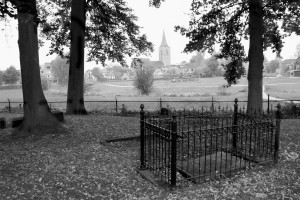
In the late medieval period, many unexplained phenomena were attributed to witchcraft. If a healthy child suddenly became ill or a cow would not give milk, the influence of witches was often suspected. Many people were persecuted and burned at the stake, particularly in the Southern Netherlands (current-day Belgium). By the 1600s, the hunt quieted down. The Enlightenment made people realize that there might well be scientific explanations for things that happened to them. Still, an accusation … [Read more...]
Quick tip – Witches in Flanders
28 October 2015 by Leave a Comment
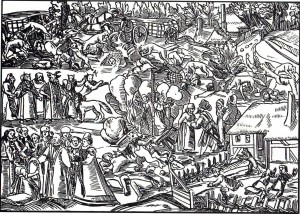
The website Witches in Flanders offers a great deal of information about witch trials in Flanders. It includes lists of witch trials and convicted witches in the 1500s and 1600s. Several people who were accused of witchcraft fled north to the Protestant parts of the Netherlands, where witchcraft was often considered a Catholic superstition. Others were not so lucky and were burned at the stake. … [Read more...]
Dutch term – Heks
26 October 2015 by 2 Comments
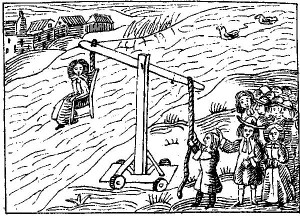
A heks is a witch. Witch trials were held in the Middle Ages and lasted until the 17th century. In modern Dutch, a heks is typically female, but in the past, the word was used for men as well. If you were accused of witchcraft, one defense would be that you were too heavy to fly on a broom. Since 1545, people could go to the heksenwaag (witches' scales) in Oudewater to be weighed and receive an official certificate if they were of normal weight. People from all over Western Europe came to … [Read more...]
Five ways the Eighty Years’ War affected our ancestors
23 October 2015 by 13 Comments
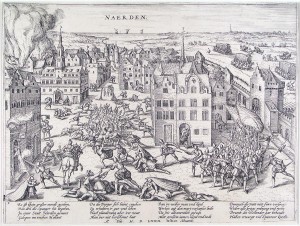
The Dutch war of Independence, commonly known as the Eighty Years' War or the Revolt, took place from 1568 to 1648. By the mid 1500s, the provinces that would form the Netherlands were part of the Habsburg empire, ruled by king Philip II of Spain. He was a staunch Catholic, while in many places in the Netherlands the Reformation had taken root. The King's firm oppression of the Reformation led a group of nobles to abjure the King and declare the independence of the Dutch Republic. During the … [Read more...]
Quick tip – Most people did not have crests
21 October 2015 by Leave a Comment
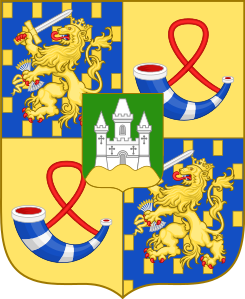
If you're looking for your family crest, you might be disappointed. Most families did not have family crests. If your ancestors were poor farmers and laborers, like the majority of families, they would not have had a family crest. Read more on how to find out if you have a family crest. … [Read more...]
Dutch term – Gilde
19 October 2015 by 2 Comments
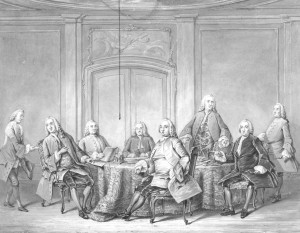
A gilde was a guild, an organization of people of the same occupation in a certain town or region. Guilds were since the Middle Ages and some of them continued to operate until around 1800, when the French made an end to their monopolies. Most guilds had rules about admittance and training. Apprentices or gezellen could only become full members (masters) after years of training and passing a master's test. Guilds were especially powerful in larger towns, where guilds held privileges which … [Read more...]