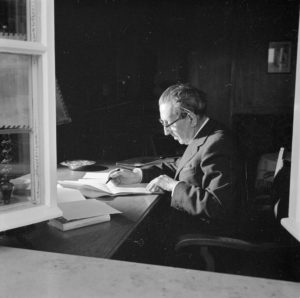
Auteursrecht (literally: author law) is the Dutch term for copyright. Here are some things that you need to know about copyright in the Netherlands: Copyright expires seventy years after the death of the creator, after which time the work becomes part of the public domain. Copyright requires originality. There is no copyright on a truthful reproduction of a record in the public domain. The provider of the scan can set limits on reuse in the terms of use of the website, but this is … [Read more...]
Quick Tip – There’s Nothing Wrong With Speculation
14 June 2017 by 6 Comments
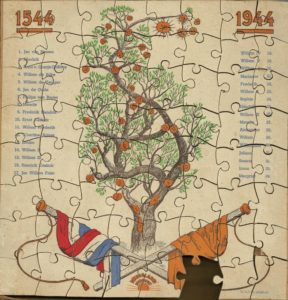
When you are researching your ancestors, there is nothing wrong with speculation. Building and testing hypotheses is a great way to discover new evidence that may help you prove your case. Just don't confuse speculation with proof, and make sure to not spread speculative information without clearly labeling as such (or not at all, to prevent people from jumping to conclusions). For example, if you are trying to find the parents of your brick wall ancestor Cornelis, and you know his oldest son … [Read more...]
Dutch term – Pachter
12 June 2017 by Leave a Comment
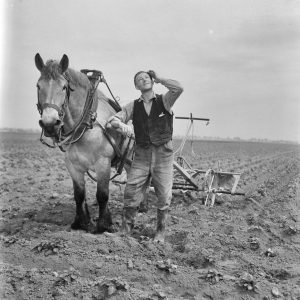
A pachter is a tenant. Most farmers in the Netherlands were tenants who did not own their farms or land. You can sometimes find tenancy contracts in court records, notarial records, or family archives. Especially in earlier times, these contracts were often made without having an official record so it may be hard to find proof. See an example of two tenancy contracts from the 1700s. … [Read more...]
Dutch Genealogy News for May 2017
9 June 2017 by Leave a Comment
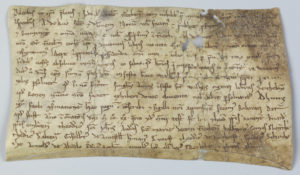
Here are some of the new websites and resources that have become available to us in the past month. Online Dutch records The National Archives published an index of houses that were sold by the Germans in World War II. Most of them had belonged to Jewish owners. The index is available as PDF or CSV. The West-Brabants Archief published scans of several town records of Fijnaart en Heijningen, Klunderrt, Willemstad, and Zevenbergen. The records include town resolutions, poll tax, property … [Read more...]
Dutch term – Peter and Meter
5 June 2017 by 8 Comments
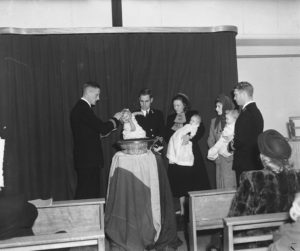
A peter is a godfather, meter is a godmother. The terms are typically used in Catholic sources. The word compeer is also sometimes used, especially in older records. In Dutch Reformed sources, the term doopgetuige (baptismal witness), or getuige (witness) is used more often. … [Read more...]
My Favorite Websites for Finding Dutch Photos
2 June 2017 by Leave a Comment

In response to last week's article about the term bakker/bakkerij, Doris Waggoner asked how I found the photos I use to illustrate the articles on this website. I thought other people might like to read my response, so I am repeating it here and will include some links to my favorite photo sites. I never have any trouble finding photos. I used to work at the National Archives in The Hague and was the technical project manager for their image bank for a while. That taught me a lot about their … [Read more...]
Dutch term – Klapper
29 May 2017 by Leave a Comment
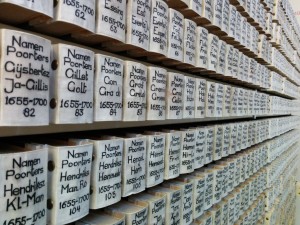
A klapper is a finding aid, usually a physical book or binder with a name index. Klappers can often be found in reading rooms of archives. They are disappearing as they are being scanned or entered into databases. Finding out what klappers exist can help you create a research plan for a visit to an archive. Some archives have a catalog or research guide on their website that indicates what klappers they have. Usually, you can only find out in the reading room itself. There may be a list of … [Read more...]
Quick tip – Common Spelling Variations in Dutch names
24 May 2017 by 5 Comments
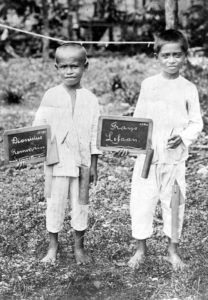
If you can't find the name you're looking for, try a spelling variation. Most Dutch search engines only find exact matches, so playing around with variations and wildcards may be necessary to find the person you're looking for. Knowing the different spellings of certain sounds in words can help. Examples of spelling variations Element Example k, kk, or ck Hoitink, Hoitinck Bakker, Backer Van Dijk, van Dijck Dirk, Dirck o, oo Gosens, Goosens Noteboom, … [Read more...]
Dutch term – Bakker and Bakkerij
22 May 2017 by 3 Comments
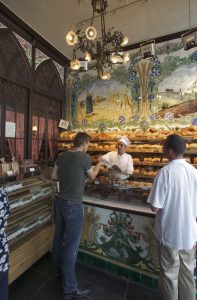
A bakker is a baker, and a bakkerij is a bakery. Bread was and is a staple in the Dutch diet. The content and weight of loaves of bread was heavily regulated. If you have ancestors who were bakers, you may find them on lists of calibrated weights, or involved in court cases if their loaves were found to be too light or containing different ingredients than advertized. … [Read more...]
Quick tip – Why Did He Die Elsewhere?
17 May 2017 by 4 Comments
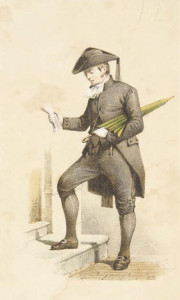
Sometimes, you will find a death record that shows your ancestor died in a different place from where he was living all his life. Common reasons are: He was in a hospital receiving care. He was institutionalized in a mental hospital. This sometimes happened to elderly people who suffered from dementia. He was in jail. He was there on business. He may have been living with relatives. He may have been visiting relatives. If you read the death record, it should say whether … [Read more...]