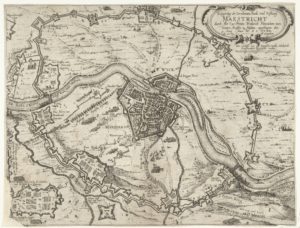
The Tachtigjarige Oorlog was the Eighty Years' War that lasted from 1568 to 1648. It was the Dutch war of Independence where the Dutch fought for independence from the Habsburg empire, ruled by the Kings of Spain. Read about Five ways that the Eighty Years' War affected our ancestors. … [Read more...]
Dutch Genealogy News for June 2017
21 July 2017 by 1 Comment
Here are some of the new sources and websites that have become available to us in the past month. Online Dutch records The Regionaal Historisch Centrum Limburg published an index and scans of the population registers of Maastricht for 1860-1890. The index was created by volunteers at the VeleHanden [Many Hands] platform The West-Fries archief published scans of the population registers of Andijk, Medemblik, Nibbixwoud, Opperdoes, and Twisk. The scans can be browsed at the West-Fries … [Read more...]
Quick tip – Netherlands category on Cyndi’s List
19 July 2017 by Leave a Comment
Cyndi's List is a wonderful directory of links to any genealogical topic you can think of. It has a Netherlands category with links to websites that are relevant if you're researching your Dutch ancestors. Cyndi's List is one of the few sites that I remember from my early internet days that is still online. I had the pleasure of meeting Cyndi Ingle, the woman behind the site, last year. The amount of information is huge, and expanding every day. You can help Cyndi by submitting new links, … [Read more...]
Quick Tip – Repeat Searches Periodically
12 July 2017 by 2 Comments
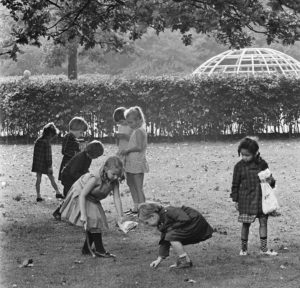
If you search a database and don't find the record you're looking for, try again later. Many databases get periodic updates or corrections, so a record that cannot be found today may be added tomorrow. For example, the people database at Archieven.nl often has new records as a result of indexing projects or because new archives decide to host their digital records there. … [Read more...]
Dutch term – Rijkslandbouwwinterschool
10 July 2017 by Leave a Comment
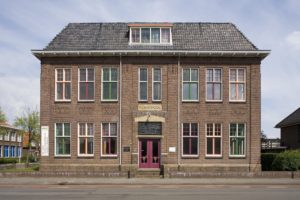
The rijkslandbouwwinterschool was the national agricultural winter school. Farmer's sons (and later, daughters) attended the school during the winter months when there was not a lot to do on the farm. They'd learn about growing crops and raising cattle. This type of school was introduced in the period 1890-1920 throughout the country. Some still exist, but as a year-round school with an agricultural curriculum. … [Read more...]
Three old people ago…
7 July 2017 by 5 Comments

One old person ago... Women did not have equal rights. Women in the Netherlands got the right to vote in 1917. But until 1956, married women needed permission from their husbands to enter into any legally binding contracts. Two old people ago... Slavery was legal in the Dutch colonies of Suriname, the Netherlands Antilles, and the Dutch East Indies. Slavery was abolished in the East Indies in 1860 and in Suriname and the Antilles in 1863. Even then slaves were required to continue … [Read more...]
Dutch term – Bij Kaarsenbrand
3 July 2017 by Leave a Comment
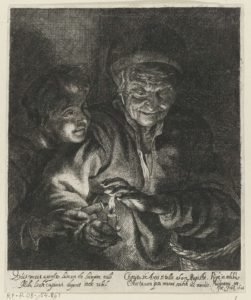
In old legal records, you can sometimes find that property was sold "bij kaarsenbrand" [by burning candle]. It does not mean that it was sold at night, but rather that the property was sold in an auction that lasted as long as a candle burned. If the candle went out, the highest bid at that time was the winning bid. It made sure that auctions would not drag on. … [Read more...]
Why the Little Dutch Boy Never Put his Finger in the Dike
30 June 2017 by 15 Comments
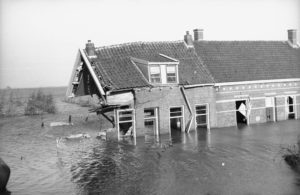
He is probably the most famous Dutch boy that never lived. The Little Dutch boy who saved the day by putting his finger in a dike. The book in which he appeared, Hans Brinker; or, the Silver Skates: A Story of Life in Holland, featured several stories. The story about the Little Dutch Boy told how he saved Haarlem from flooding by putting his finger in the dike. Another story about Hans Brinker was about a boy who wanted to win silver skates. Some people think Hans Brinker was the Little … [Read more...]
Dutch term – Klederdracht
26 June 2017 by Leave a Comment
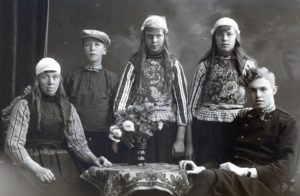
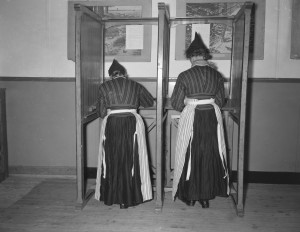
Klederdracht means traditional costume. Many regions had their own style. Experts can tell you what area a person in a photo came from just by looking at the style of headwear or clothing. … [Read more...]
Dutch Archives that provide Free Scanning on Demand
23 June 2017 by 10 Comments
[last update: 14 May 2025] In the Netherlands, archives provide their already digitized records available online for free. But several archives go a step further, and also allow you to request documents to be scanned free of charge. These archives have allocated budget for digitizing their collection. Part of this budget is used for larger projects, and another part is used for scanning-on-demand where the users determine the order in which the records get digitized. The resulting scans … [Read more...]