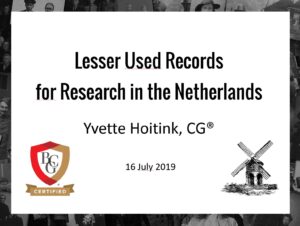
On Tuesday 16 July 2019, Yvette Hoitink will present a webinar about "Lesser Used Sources for Research in the Netherlands." The webinar is part of the Board for Certification of Genealogist series of webinars at FamilyTreeWebinars. The Netherlands has excellent records. Records of births, marriages, and deaths were kept by the civil registration since 1811 and by churches since the early 1600s. Genealogists who don’t look beyond these records may create trees that go back ten … [Read more...]
Coming up – Webinar about Lesser Used Sources for Research in the Netherlands
10 July 2019 by Leave a Comment
Dutch Genealogy News for June 2019
5 July 2019 by Leave a Comment
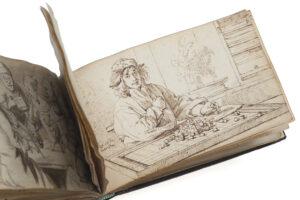
Here is an overview of the new sources, projects, and news about archives that were announced last month. Online records The burgher records of Zierikzee for 1302 to 1810 are now available via the Zeeuwen Gezocht section of the Zeeuws Archief website. Tholen prison records (1830-1888) have been scanned and indexed and are now available at the Tholen archives website. The Schiedam marriage records 1576-1811 have been scanned and can be browsed at the Schiedam genealogy website (DTB … [Read more...]
Quick tip – Some records may be in French (1795-1813)
3 July 2019 by Leave a Comment
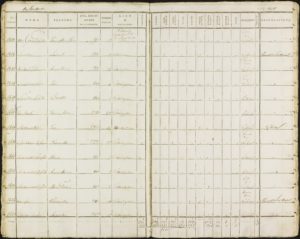
From 1795 to 1813, the Netherlands was under French rule. As a result, some of the records created in this period were in French. This includes the earliest registers of the civil registration of births, marriages, and deaths. The civil registration was introduced in 1811 in most parts of the country, and as early as 1794 or 1795 in parts of Zeeland and Limburg. The records for the period up to 1813 are in French. The census taken around 1811 is also in French. … [Read more...]
Records of Pilgrims in Leiden now on DutchGenealogy.nl
28 June 2019 by 1 Comment
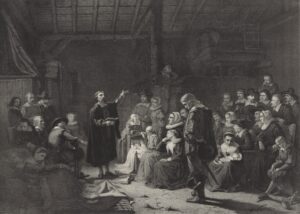
When the Pilgrims fled religious persecution in England, they settled in Leiden. They lived and worked in Leiden, and some married there or had children baptized there. They left for America on the Mayflower in 1620, but not after leaving traces in Dutch records. The Leiden Archives has transcribed several of these records. They used to be available on a separate website, which has been offline for several years. The transcriptions and English abstracts of these records have now been made … [Read more...]
Dutch term – IJzergieterij
24 June 2019 by Leave a Comment
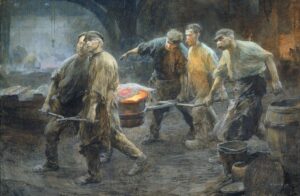
An ijzergieterij is an iron foundry. Especially during the industrial revolution in the 1800s, iron and steel became an important building material and ingredient for many items. The first foundry started in 1689, to supply arms to the army. By the late 1800s, dozens of foundries operated throughout the Netherlands. They were essential to the development of the railway network in the country. … [Read more...]
Was Eleanor of Aquitaine my Ancestor? Generation 19 – Willem van Wijfliet
21 June 2019 by 7 Comments
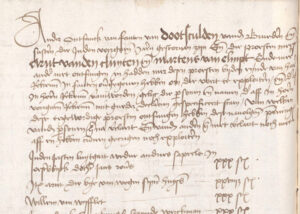
This is the twentieth post in a series about my possible line of descent from Eleanor of Aquitaine. In the first post, I explained how I discovered the possible line, and how I am going to verify it one generation at a time. In the last post, I proved that my fifteenth great-grandmother Johanna van Wijfliet was the daughter of Willem van Wijfliet and Jenneken Henrick Daniels. Willem van Wijfliet, son of Jan van Wijfliet Research into Johanna van Wijfliet turned up several records that … [Read more...]
Quick tip – Get tickets for MyHeritage Live
19 June 2019 by Leave a Comment
MyHeritage Live will be held in Amsterdam from 6 to 8 September 2019. Yvette Hoitink will be speaking there about Dutch genealogy. Get your tickets now. You can also enter the contest to win free tickets and a free stay. … [Read more...]
Quick tip – Follow up in other records
12 June 2019 by Leave a Comment
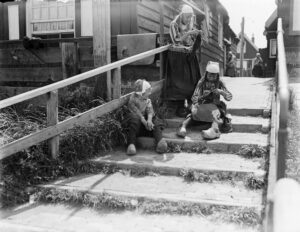
When we find our ancestor in one record, we can often use it as a stepping stone to finding other records. The record can be like a loose thread to unravel a greater yarn. Here are some examples: A marriage record may have a note in the margin about a divorce. It should name the court and date of the divorce. You can use this to find the case file in the court records. A marriage record has supplements that are abstracts of other records. You can use these to find the originals. It … [Read more...]
Dutch term – Bedstee
10 June 2019 by 2 Comments
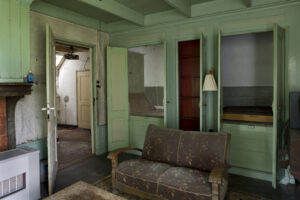
A bedstee was a bedstead. Typically, it was a closet in the kitchen or living room where people slept. At night, the doors would be closed to contain the body heat. The bedstead would be short, typically less than 1.50 m/5 feet, since people slept upright. Some bedsteads had a shelf for a crib, or a drawer underneath the bed where infants would be put to sleep. You may encounter bedsteads in estate inventories. Estate inventories are typically organized by room, which will show you whether … [Read more...]
Dutch Genealogy News for May 2019
7 June 2019 by Leave a Comment
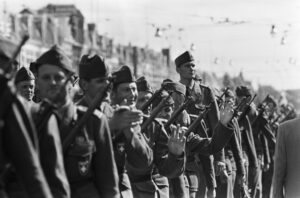
Here is an overview of the new sources, projects, and news about archives that were announced last month. Online sources World War II records from all over West Europe are now available at the Arolsen Archives website. After World War II, the Red Cross got the task of determining what had happened to all the displaced persons and notify family members of deaths that occurred during the war. Records about displaced persons, concentration camps, penal institutions, and special collections … [Read more...]