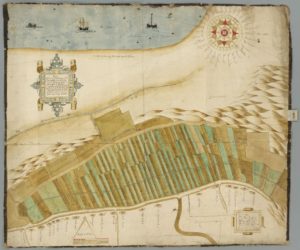
A polder is a section of land that was claimed from the sea or marsh. This was traditionally done by building a dike around it the land and draining the water using mills. A polder will typically have many drainage canals crisscrossing the landscape. … [Read more...]
Seven Ways to Find Your Dutch Ancestor’s Occupation
2 September 2016 by 3 Comments
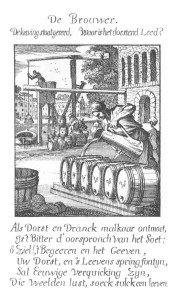
Finding your ancestor's occupation is a great way to learn more about his life and can be a gateway to finding more records. Here are six different ways you can find out what your Dutch ancestors did for a living. 1: Civil registration records If your ancestor lived in the Netherlands after 1811, you should be able to find your ancestor in the Civil Registration. Birth records list the occupation of the father, sometimes of the mother, and of the witnesses. Marriage records list the … [Read more...]
Quick tip – Learn about places from newspapers
31 August 2016 by Leave a Comment
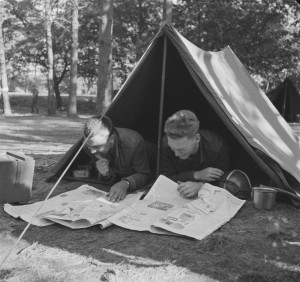
You can learn a lot about the places where your ancestors lived from newspapers. You can see what was going on, read about Dutch settlements and find out about the people who were living there. Many Dutch newspapers have been digitized by the Royal Library and are available at Delpher. Select "Kranten" [newspapers] to search the newspapers for the name of the town where your ancestors lived. Their selection includes several Dutch newspapers in North America in the 19th century. See Dispatch … [Read more...]
Dutch term – Haven
29 August 2016 by Leave a Comment
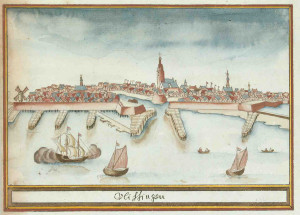
A haven is a harbor. The Netherlands had and has some of the largest harbors in the world. They provided work for a range of occupations, both for people working at sea like fishermen and skippers, and for people working in the harbor like merchants, innkeepers and carriers. The harbors of Rotterdam and Amsterdam were also major ports of embarkation for emigrants leaving western Europe for North America. … [Read more...]
How to Record Prefixes and Patronymics
26 August 2016 by 3 Comments
Dutch names often have prefixes like Van der, De, and Ter; and patronymics like Jans (son of Jan) or Pietersen (son of Pieter). Dutch genealogy programs have separate fields for prefixes and patronymics but most international programs do not. So where do you enter these name parts in a genealogy program that only has fields for First name and Last name? My solution Here is how I handle it: I put prefixes in the Last name field, uncapitalized. For people who do not use a last name, … [Read more...]
Quick tip – List of Dutch pilots in the RAF and FAA
24 August 2016 by Leave a Comment
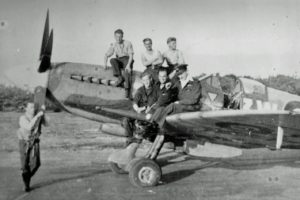
During World War II, several Dutch pilots joined the Royal Air Force (RAF) and the Fleet Air Army (FAM) to help liberate the Netherlands. The Department of Defense website has a list of all these men. List of Dutch pilots in the RAF and FAM (click through to the PDF). … [Read more...]
Dutch term – Legitieme portie
22 August 2016 by Leave a Comment
The legitieme portie (legitimate portion) is the part of the inheritance that children are legally entitled to. Under Dutch law, at least since the 1800s, children cannot be disowned by their parents completely, even if the parent makes up a will. Their legitimate portion is half of what they would have inherited if there was no will. This is different than in Anglo-Saxon law, where the testator is free to divide their estate as they see fit, including disowning their children. For … [Read more...]
Source – Census records
19 August 2016 by 2 Comments
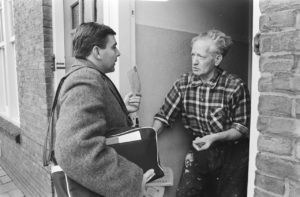
The first nation-wide census of the Netherlands was held in 1795, during the French occupation. The first official Dutch census that recorded every individual was held in 1830 and was held every ten years. In 1850, the population register was introduced to keep the population information up-to-date in between censuses. Initially, the census was used to verify and correct the population registers. With the introduction of digital record keeping, this was no longer necessary so the decennial … [Read more...]
Quick tip – Also Check Church Records After 1811
17 August 2016 by 5 Comments
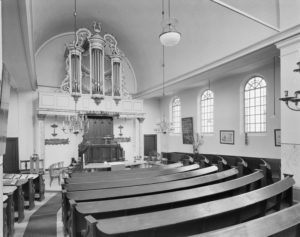
Church records of baptisms, marriages, and burials are the go-to sources for vital information before the introduction of the civil registration. After 1811, we usually don't bother since the civil registration records are often more reliable. But these church records can contain important information. When to check the church records Consulting as many records as you can about an ancestor is always a good idea, since you never know what you will find. There are certain situations when … [Read more...]
Dutch term – Broederdienst
15 August 2016 by Leave a Comment
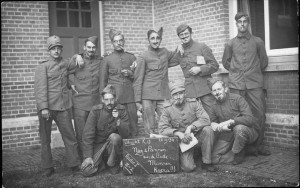
Broederdienst literally means "brother service." It was a reason for exemption of military service. If a family had an even number of sons, half of them had to serve. If they had an uneven number of sons, the lesser half had to serve. The brothers who did not have to serve got an exemption for broederdienst. You will often find these exemptions listed in the marriage supplements. … [Read more...]